



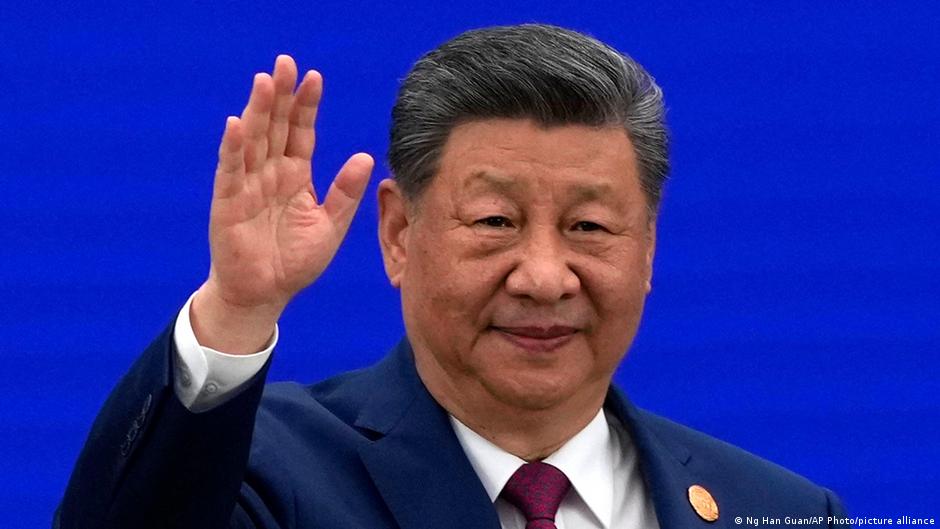
Chinese President Xi Jinping renewed calls for “reunification” with Taiwan on Thursday, declaring the goal historically inevitable while notably refraining from explicit threats of force.
“The historical trends are unstoppable. The complete reunification of our motherland must be realized, and it can, without doubt, be realized,” Xi stated during a speech commemorating the 160th birthday of Sun Yat-sen. The revolutionary leader spearheaded the 1911 uprising that toppled the Qing dynasty and established the Republic of China.
Taipei swiftly rejected the remarks, asserting that the island’s democracy would never accept rule by the Chinese Communist Party.
Roots of the Taiwan Dispute
Following the Republic of China’s founding in 1912, a civil war erupted in 1927 between the Nationalist Kuomintang (KMT) and the Communist Party. After World War II and the end of Japanese occupation, Mao Zedong’s Communists gained the upper hand, prompting the Nationalist government to retreat to Taiwan in 1949.
Since the split, both the People’s Republic of China on the mainland and the Republic of China in Taiwan have claimed to be the legitimate successors to Sun Yat-sen’s political legacy. Under the “One China” policy, most nations formally recognize Beijing, yet many maintain robust unofficial diplomatic, economic, and cultural ties with the self-governed, democratic island.
Xi’s Stance on Reunification
Although the address primarily honored Sun Yat-sen, Xi’s comments on Taiwan drew immediate international scrutiny. He described reunification as an unwavering historical mission for the Communist Party, vowing that Beijing would “never leave any room for ‘Taiwan independence’ separatist activities in any form.”
“We will definitely give full consideration to Taiwan’s realities and take full account of the interests and feelings of our compatriots in Taiwan,” Xi added. “Mr. Sun Yat-sen consistently upheld the unity of the country and the solidarity of the nation, and he firmly opposed all words and actions that split the country or the nation.”
While the speech omitted direct references to military action, Xi has previously declined to renounce the use of force to bring Taiwan under Beijing’s control.
In response, Taiwan’s Mainland Affairs Council reiterated that neither the government nor the public would accept subordination to Beijing. “As for the wording on Taiwan unification, it isn’t much different from the past,” council spokesperson Liang Wen-chieh told reporters.
Escalating Pressure and Regional Context
Xi’s address preceded an APEC summit in Shenzhen, where he was expected to meet with U.S. President Donald Trump. Washington has long supported Taiwan’s defense against coercion, providing the island with critical arms supplies.
In recent years, Beijing has intensified military operations around the island and in the Taiwan Strait, maneuvers widely interpreted as both intimidation tactics and potential rehearsal for a blockade or invasion. On Thursday, Taiwan’s defense ministry reported that Chinese fighter jets, drones, and warships had commenced a “joint combat readiness patrol” encircling the island.
Also Read
- Never Wait Around Again: Flighty’s New Tool Pinpoints the Perfect Time to Head to the Airport
- Potential Successors Emerge in Speculation Over Nvidia’s Future Leadership
- Poundland Owner Receives Two‑Week Extension to Safeguard Retail Chain
- Thursday’s Biggest Analyst Calls: Nvidia Slips, SpaceX Overweight, AMD Gains and More