



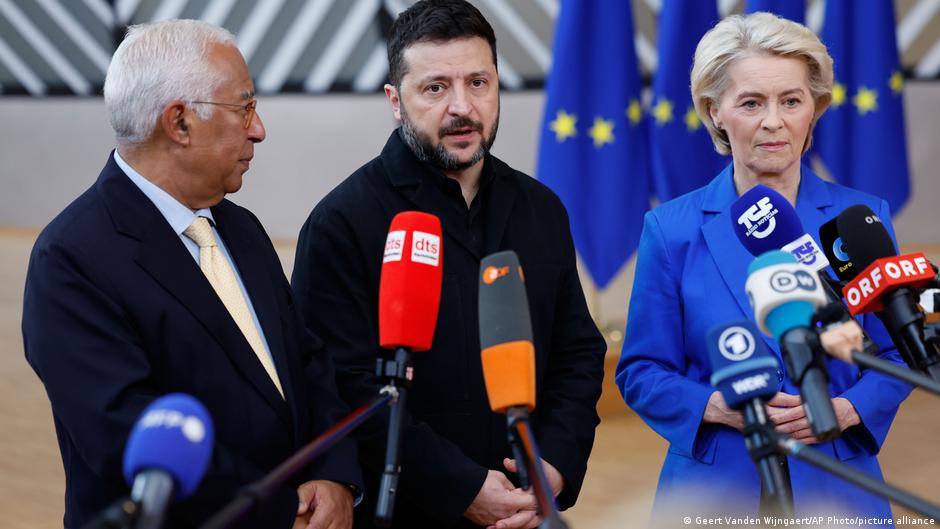
Ukrainian President Volodymyr Zelenskyy addressed European Union leaders at a summit in Brussels this week, where he received strong public support from EU officials. However, securing vital military and financial assistance is becoming increasingly challenging, particularly amid growing tensions with U.S. President Donald Trump.
During a press briefing at the summit, Zelenskyy warned that “Putin wants to destroy us” and emphasized that Ukraine must brace itself for a harsh winter ahead. Analysts echo this concern, noting that the coming months may prove among the most difficult for Ukraine since Russia’s full-scale invasion began.
“Ukraine is arguably entering the most challenging winter since the start of the full-scale invasion,” said Olena Prokopenko, a senior fellow at the German Marshall Fund of the United States. Her assessment underscores the mounting pressure facing the nation as it prepares for intensified conflict during colder months.
Three critical issues dominated discussions between Zelenskyy and EU leaders: strained U.S.-Russia ties, ongoing Starlink connectivity challenges, and urgent funding requirements. Each poses significant hurdles to Ukraine’s resilience moving forward.
Are U.S. Policies Shifting Toward Russia?
Zelenskyy’s trip to Brussels underscores his growing dependence on European solidarity, especially as relations with the United States deteriorate. Concern is mounting within both Ukraine and the EU over perceived shifts in American foreign policy toward Moscow.
In a recent interview with Newsmax, President Trump commented, “I think I find Zelenskyy to be more difficult to deal with than [Russian President Vladimir] Putin.” This remark highlights an alarming divergence in perspectives that could impact transatlantic cooperation.
Adding fuel to the tension, Trump finalized a deal to purchase Russian diesel on October 12—an action widely viewed as undermining existing sanctions and delivering a symbolic setback for Kyiv.
Zelenskyy’s directive for Ukrainian forces to carry out renewed strikes on Russian oil infrastructure prompted Trump to label the move “a disgrace,” further straining bilateral ties.
How Russia turned sanctions into a diesel deal
To view this video please enable JavaScript, and consider upgrading to a web browser that supports HTML5 video
Speaking to reporters at the summit, Zelenskyy acknowledged indirect indicators suggesting diminished U.S. prioritization of Ukraine. He stated, “U.S.-built missiles are being sent to the Middle East; it’s no secret that we are not a priority.” In response, he called upon European partners to fill the gap by providing essential weaponry needed to endure the winter.
Since Russia launched its full-scale invasion in February 2022, the United States has served as Ukraine’s largest military benefactor. Yet, the dynamic has grown tense since Trump assumed office for a second term, raising questions about future support levels.
Starlink Connectivity Under Strain
Ukraine relies heavily on Starlink—a satellite internet service developed by Elon Musk’s SpaceX—and its military counterpart, Starshield, for battlefield communications, targeted strikes against occupied territories, and drone interception capabilities. Notably, these systems have not been used for long-range attacks inside Russia itself.
At the Brussels gathering, Zelenskyy expressed deep concern over unexpected disruptions to the network, describing the situation as “deeply unpleasant.” He warned that such limitations are hampering Ukraine’s defensive efforts.
Both Musk and the White House have publicly denied any involvement in the reported slowdowns, leaving many questions unanswered about the cause behind the service degradation.
EU High Representative for Foreign Affairs Kaja Kallas recognized the importance of Starlink, stating, “It is really necessary for Ukraine, and unfortunately, in the short term, Europe cannot replace this capability.”
Prokopenko noted, “This is precisely why Ukraine’s best medium-term strategy remains continued reliance on the U.S. Meanwhile, the EU plays a crucial role in advocating for the continuation of technological support from Washington.”
Speaking to journalists, Zelenskyy confirmed that while Starlink speeds have improved somewhat, they remain below optimal standards. He added that Ukraine is exploring alternative collaborations, including partnerships with France and other nations, to identify partial workarounds.
Did someone order Ukraine’s high-speed Starlink shutdown?
To view this video please enable JavaScript, and consider upgrading to a web browser that supports HTML5 video
Fiscal Challenges Mount for Kyiv
On the final day of the summit, Zelenskyy appealed directly to EU leaders for sustained financial backing, requesting nearly €70 billion ($80 billion) in additional aid for the upcoming year.
“This is a realistic amount, and I urge you to find this support,” he said. “It will help us hold back Russia.”
Last year, the EU extended close to €90 billion ($100 billion) in loans to Ukraine, solidifying its position as Kyiv’s foremost international sponsor. Despite this assistance, government officials continue to project steep fiscal shortfalls.
“The war is becoming objectively more expensive, and the Ukrainian economy is increasingly affected by Russian strikes, resulting in a sharp drop in tax and customs revenues,” Prokopenko explained. “Therefore, the need for resources will only grow.”
As the summit concluded, European Council President Antonio Costa reaffirmed that Ukraine “remains a priority,” instructing the European Commission to draft proposals aimed at mobilizing further funding by 2027. While the precise mechanism remains unclear, initial signals suggest the bloc intends to meet Kyiv’s budgetary demands somehow.
European Commission President Ursula von der Leyen pledged that the EU would “continue to lead” in supporting Ukraine but cautioned that global partners must also step up their contributions.
Ukraine Vows to Persist with Dignity
Zelenskyy departed Brussels without firm financial guarantees or numerical pledges but left with renewed verbal assurances of European unity and support.
Closing his press conference, the Ukrainian president delivered a stirring message: “We will keep living and fighting with dignity.”
Edited by: Carla Bleiker