



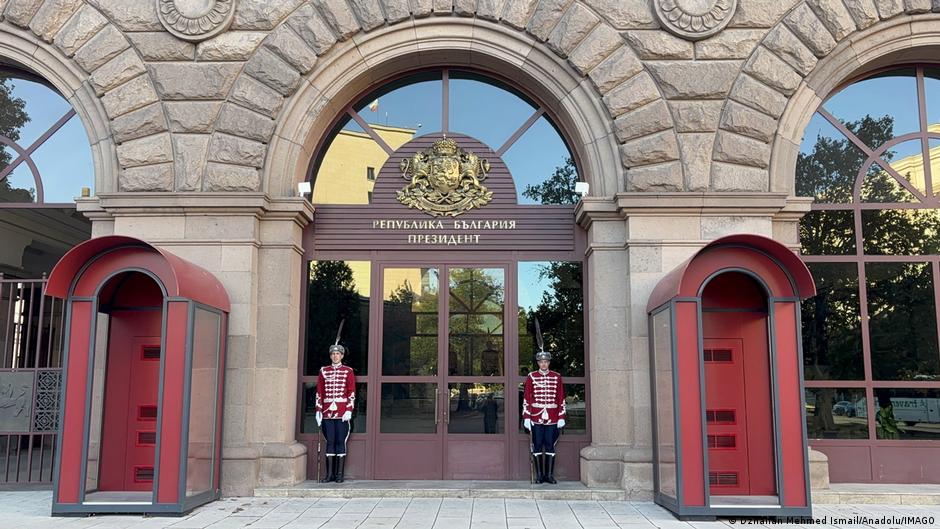
Bulgarians headed to the polls Sunday for a presidential election that has become a referendum on the country’s orientation toward the war in Ukraine and its historic ties to Moscow.
The vote unfolds against a backdrop of heightened tension following drone strikes on merchant vessels in the Black Sea off the Bulgarian coast, incidents that have underscored the conflict’s proximity for the former Soviet satellite state.
Polling stations opened at 7 a.m. local time (0500 GMT) and were scheduled to close at 8 p.m. (1800 GMT), with exit polls expected immediately afterward. Official results may take up to 48 hours to finalize.
While the Bulgarian presidency is largely ceremonial, the office wields significant constitutional authority: the head of state appoints caretaker governments during political crises, serves as commander-in-chief of the armed forces, and holds the power to veto legislation.
How Russian aggression is shaping Bulgaria’s presidential election
To view this video please enable JavaScript, and consider upgrading to a web browser that supports HTML5 video
Leading Contenders in the Presidential Race
The frontrunner is incumbent Vice President Iliana Iotova, 62, who assumed the presidency earlier this year after Prime Minister Rumen Radev resigned to contest parliamentary elections that subsequently returned him to power. Opinion polls place Iotova’s support between 41% and 47%. She advocates dialogue with Moscow as the path to peace in Ukraine and opposises military assistance to Kyiv—a position aligned with Radev’s foreign policy.
Her primary challenger is Andrey Gyurov, 50, a former caretaker prime minister polling at 28% to 31%. Backed by the pro-Western opposition, Gyurov is a vocal critic of Radev’s approach to Russia and staunchly supports Bulgaria’s Euro-Atlantic integration as an EU and NATO member state.
Trailing in third is Kostadin Kostadinov, leader of the pro-Russian far-right Vazrazhdane party, with 10% to 13% support. The field comprises 27 candidate pairs for president and vice president, nearly half of whom are openly pro-Kremlin.
Should no candidate secure an absolute majority in the first round, a runoff is scheduled for November 1, with Iotova and Gyurov widely expected to advance.
Key Issues Dominating the Campaign
Russia’s invasion of Ukraine dominates the electoral discourse, particularly after four merchant ships were reportedly struck by drones off Bulgaria’s Black Sea coast this month in suspected spillover from the conflict. Additionally, Starlink satellite internet equipment—critical to Ukraine’s defense communications—was set ablaze near the capital, Sofia.
While Radev acknowledged the attacks appeared to benefit Russia and summoned the Russian ambassador, his government has stopped short of directly attributing the incidents to Moscow. The strikes have nonetheless intensified concerns over Russian intentions to escalate the conflict.
Economic pressures also feature prominently. Soaring energy costs and inflation have inflicted significant hardship on Bulgaria, the European Union’s poorest member state. Candidates across the spectrum have addressed the cost-of-living crisis.
Furthermore, voters cite endemic government corruption as a persistent concern and express a desire for political stability after a succession of elections and coalition collapses in recent years.
Also Read
- Brazil’s 2026 Election: Lula and Bolsonaro Head to Tense Second-Round Showdown
- Nearly 1,000 Detained in France as Cost-of-Living Protests Spark Clashes Nationwide
- ‘I cannot teach you integrity’: How employee theft is hurting small businesses in Africa
- Yashar Party Urges Halting Netanyahu Meeting with Police Chief Over Election Integrity Concerns