




In July, Australia’s labor market showed a noticeable slowdown, with employment declining by 15.8K following a revised increase of 80.2K in June, falling short of the expected 11.4K gain. The unemployment rate edged up from 4.4% to 4.5%, surpassing the forecast of 4.4%. Additional indicators also weakened, as the participation rate slipped from 67.0% to 66.9% and the employment‑to‑population ratio fell from 64.0% to 63.9%.
Hours worked also signaled a cooling trend, slipping 0.6% month‑over‑month—or 12 million hours—to 1.998 billion. The decline was led by a 11K drop in male employment and a 5K drop in female employment, while full‑time female jobs rose 17K. Part‑time employment fell 22K, outweighing the gains. Underemployment remained steady at 6.4%, indicating a measured rather than broad‑based deterioration.
The Reserve Bank of Australia now has additional evidence that tighter financial conditions are dampening employment, after Deputy Governor Andrew Hauser noted on Wednesday that the Bank had observed a slowdown in both consumption and employment growth and that further data were needed. July’s report confirms this trend, as employment, participation, and hours worked all weakened concurrently. While inflation and energy costs remain high, the data lessen the immediacy of another near‑term rate hike and underscore the significance of forthcoming inflation figures for assessing the RBA’s hawkish stance.
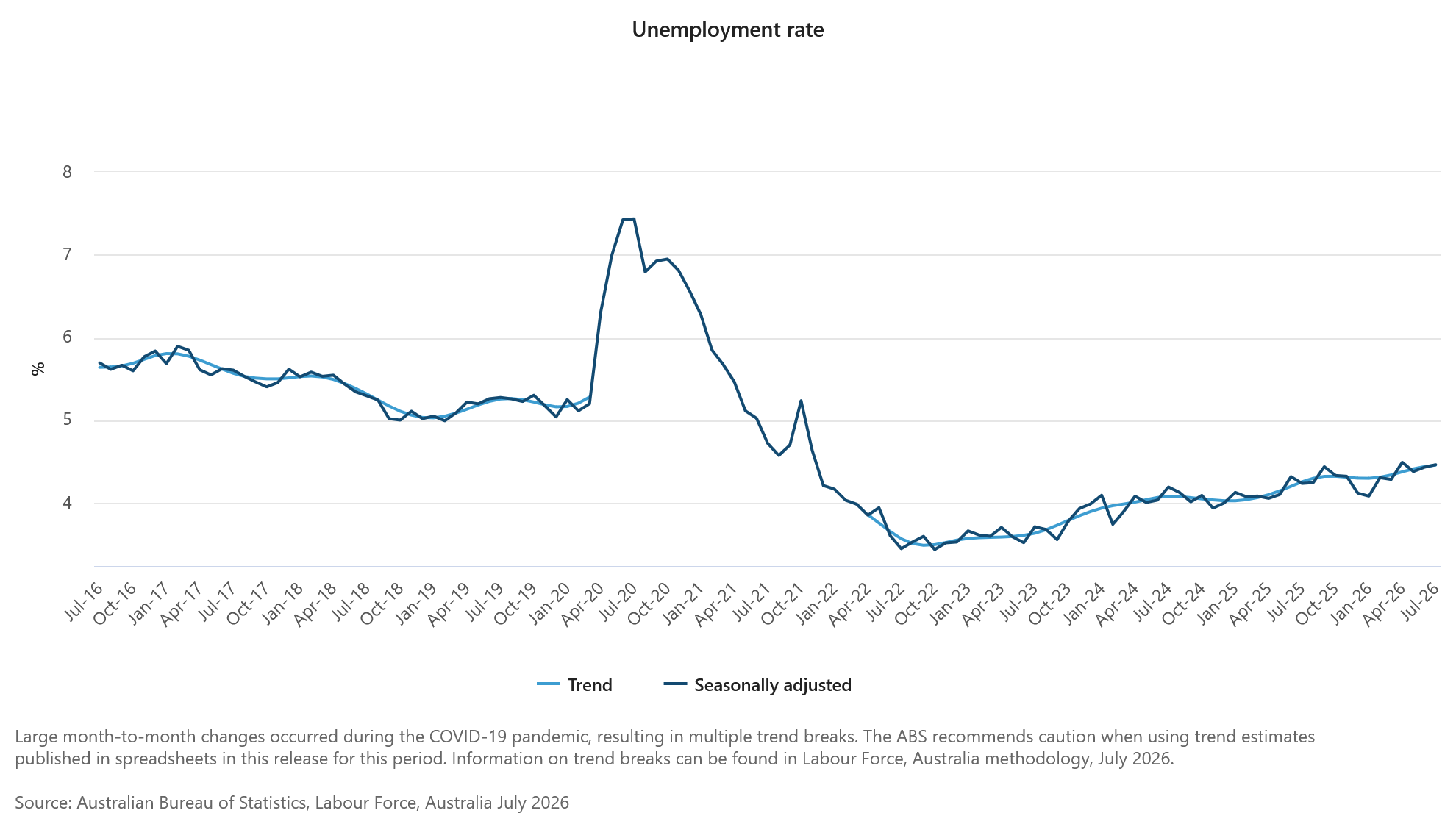
Data Summary
| Indicator | Actual | Expected | Previous |
|---|---|---|---|
| Employment Change | -15.8K | +11.4K | +80.2K |
| Unemployment Rate | 4.5% | 4.4% | 4.4% |
| Participation Rate | 66.9% | — | 67.0% |
| Employment-to-Population Ratio | 63.9% | — | 64.0% |
| Underemployment Rate | 6.4% | — | 6.4% |
| Monthly Hours Worked | 1.998bn | — | 2.010bn |
Key Takeaways
- Employment contracted by 15.8K in July, following a revised 80.2K rise in June, well short of the expected 11.4K gain.
- The unemployment rate increased from 4.4% to 4.5%, exceeding consensus expectations of a flat reading.
- The slowdown extended beyond headline employment, with the participation rate slipping from 67.0% to 66.9% and the employment‑to‑population ratio falling from 64.0% to 63.9%.
- Hours worked declined by 12 million, or 0.6% month‑over‑month, indicating softer labor utilization.
- Underemployment remained at 6.4%, suggesting the cooling trend has not yet escalated into a broad‑based deterioration.
- Male employment fell by 11K, while female employment slipped by 5K, even though full‑time female jobs rose 17K.
- The July data provide further evidence of the employment slowdown that Deputy Governor Andrew Hauser said policymakers still require.
- The report lessens the urgency for another near‑term rate hike, though inflation and oil‑price risks keep the RBA’s tightening options open.
Also Read
- Bitcoin treasury Hyperscale sells 686 BTC to clear loans but says cash won’t cover next 12 months
- Bitcoin Surges 8.7% in Best Day Since March, Flipping Prediction Markets to a Toss-Up
- FOMC Minutes Show Fed Trying to Communicate Less Without Saying Less – Action Forex
- Trump Urges Senate Passage of Crypto Clarity Act, Signals Potential Bitcoin Accumulation