







Archaeologists in Egypt have unearthed a 1,700-year-old limestone tomb featuring a rare ancient Greek poem, likely composed by a son mourning his father. The structure, distinguished by a pyramid-shaped roof, dates to the fourth century CE, a period when the Roman Empire governed Egypt. The discovery was made in the Dakhla Oasis near the ancient city of Mothis, known today as Mut.
Constructed for a husband and wife, the tomb contains a stone plaque bearing a 19-line Greek epitaph, according to a translated statement from the Egyptian Ministry of Tourism and Antiquities. The deceased man, identified as Pisechtes, may have served as a judge. The statement noted that no human remains were found at the site.

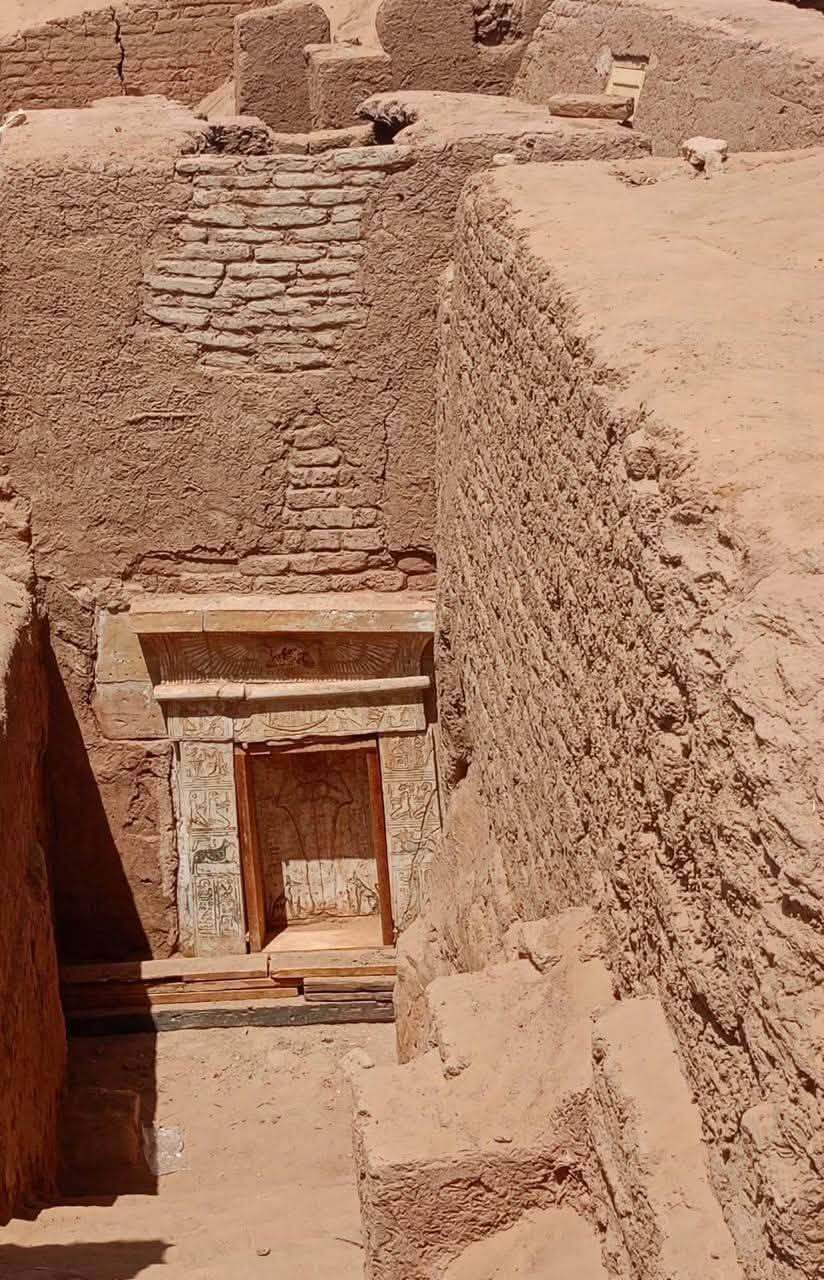
Hieroglyphic inscriptions within the tomb record protective spells for the deceased, including passages referencing the “Amduat”—a funerary text describing the sun god’s nightly passage through the underworld. Excavators also recovered an offering table, a purification basin, pottery, and at least one coin depicting Constantine the Great, who reigned from 306 to 337 CE. Notably, the tomb lacks Christian iconography or texts, despite Constantine’s conversion to Christianity late in his reign.
Fourteen steps descend to the tomb entrance, adorned with imagery including a winged sun disk, the god Osiris, and a pair of cobras.
“Listen, father!”
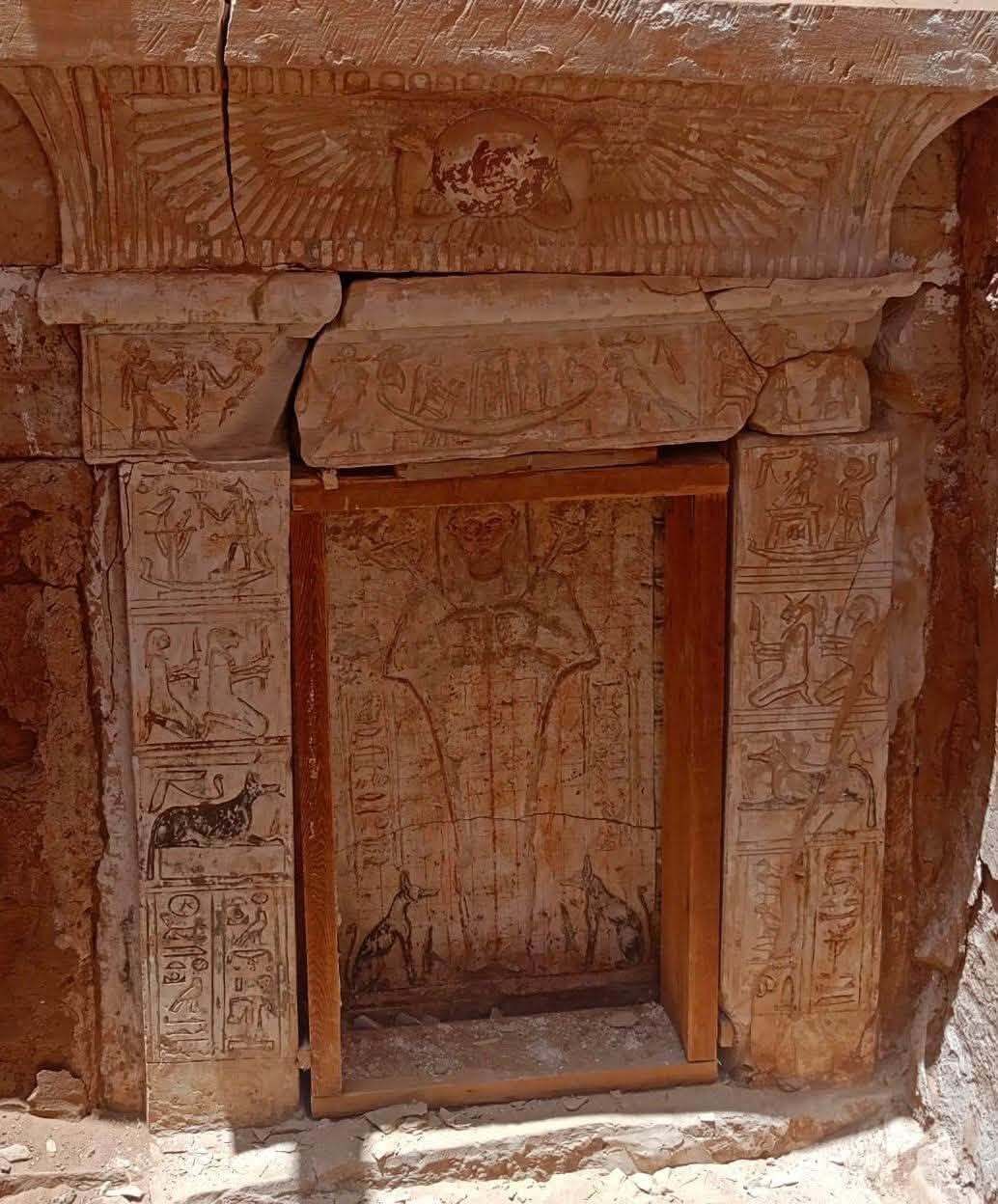
The inscribed plaque preserves a lament for Pisechtes written in ancient Greek. Angelos Chaniotis, a scholar at the Institute for Advanced Study in New Jersey who was not involved in the excavation, described the text as a “highly literary and original epigram” employing grammar reminiscent of Homeric epic.
The poem extols the deceased’s kindness and wisdom, referring to him as an “advisor in life.” In its closing lines, Pisechtes’ son, Sarapion, directly addresses his father—”Listen, father!”—imploring him to accept funerary libations and the offerings of grieving children, Chaniotis explained.
“An interesting feature of the inscription is the use of diacritical marks,” such as accents, Chaniotis added. “This is an indication of the high level of education of the author of the epigram.”
Evidence suggests the tomb may have been reused in a later period; a mud-brick shrine erected above the entrance appears to postdate the original burials of Pisechtes and his wife.
Also Read
- Boox Unveils Picco, Its Compact 3.97‑inch E‑Reader priced at $100
- NASA, Boeing Share Update on Commercial Starliner Development Plans
- Azerbaijan Grand Prix: A Nail‑biting Finish for Verstappen and Hadjar
- Mathematicians Solve Longstanding Graham Conjecture Using Randomization and Anti‑Concentration Techniques


