



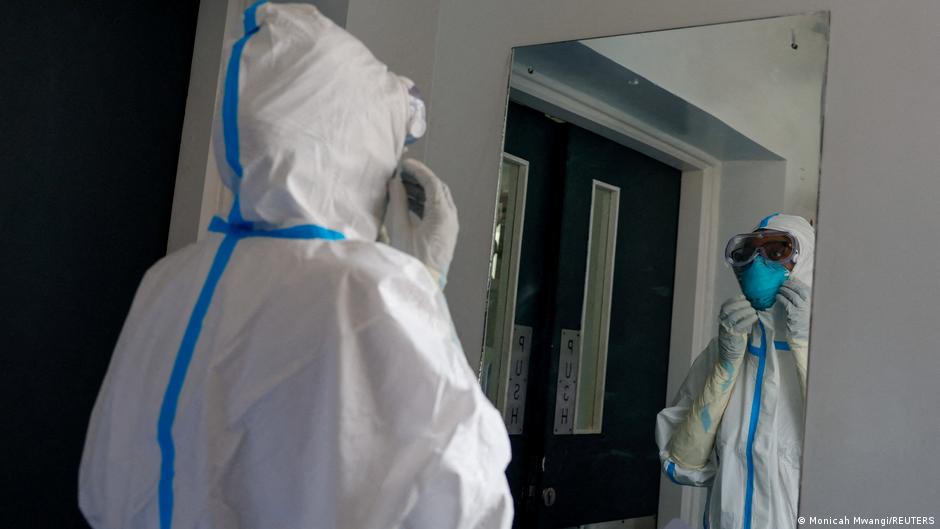
Kenya is scrambling to contain Ebola linked to the record‑deadliest outbreak in the Democratic Republic of Congo (DRC). The East African nation has reported two confirmed cases and one death, while the DRC has recorded over 9,000 cases and 4,400 fatalities.
The country’s first Ebola patient died at Nairobi Hospital on October 5. The 40‑year‑old Kenyan had travelled by road from the DRC into Uganda before boarding a flight to Nairobi via Entebbe on October 3.
One of his relatives has now tested positive for the virus. The 39‑year‑old was under quarantine when symptoms emerged on October 13. “Both cases are linked, and there is no evidence of spread in the wider community,” Kenya’s health ministry said.
Contact tracing has been ongoing since officials first detected the case. Of the 128 individuals who had contact with the first patient, 113 have been identified, according to the ministry. All but five—who are reported to be abroad—have been placed in quarantine.
Should Kenyans Worry About Ebola Spreading?
Public anxiety is mounting, with fears of potential lockdowns, economic disruption and doubts about the government’s readiness. “It’s a very dangerous disease, so it’s very shocking,” a Nairobi resident told DW. Another citizen expressed disappointment: “The government has been caught unaware. It appears to me that the government was not prepared, especially at the entry point of this particular person who was found to be suffering from Ebola.”
Several residents also cited a lack of clear information. “The government should do more in educating and sensitizing about it, and raising awareness,” one woman said.
Kenya’s Health Ministry, through its Cabinet Secretary Aden Duale, has been seeking to allay fears, urging vigilance and advising anyone developing symptoms to report to the nearest medical facility. The World Health Organization (WHO) notes that symptoms can appear between 2 and 21 days after infection.
Early signs include fever, fatigue, malaise, muscle pain, headache and sore throat. Later stages may involve vomiting, diarrhea, abdominal pain, and kidney and liver infection. These symptoms can mimic other illnesses such as malaria or typhoid, and only an Ebola test can confirm exposure.
Criticism and Calls to Improve Screening
Former Chief Justice David Maraga, who has signaled an interest in the 2027 presidential race, questioned how a man carrying Ebola could pass through screening at Jomo Kenyatta International Airport. “We don’t know how many have been infected. We must demand appropriate action so that we don’t have deaths arising from that disease,” Maraga told *The Standard*.
Vice‑President Kalonzo Musyoka (2008‑2013) noted that doctors at Nairobi Hospital, not border systems, detected the danger.
Dr. Dennis Miskellah of the Kenya Medical Practitioners, Pharmacists and Dentists Union said the cases expose a health system that is not pandemic‑ready. “This system is not yet resilient. It did not learn from the COVID pandemic that we had a few years ago,” he observed. “Since May, we’ve had this outbreak in the region. Uganda, our immediate neighbour, had almost 20 cases. So we had ample time to prepare adequately. But it seems like somebody dropped the ball.”
Following the DRC’s declaration of the Ebola outbreak in May, Kenya raised its alert level, designating several hospitals as isolation centres. Screening at airports and border points was intensified, and mobile laboratories were deployed. Flights from several African countries were directed to land in designated airport wings for enhanced screening.
Where Are the Gaps in Kenya’s Health System?
“Top of it all is that there has been a serious lapse of leadership in governance of healthcare in this country,” Miskellah said. “All those broken pillars, there’s no clear responsibility or chain of command, whether it’s the Ministry of Health or the 47 county governments who are semi‑autonomous.”
Capacity at some isolation centres is limited. Rural facilities lack resources such as the protective equipment available at major hospitals, according to Miskellah. A freeze on public‑service hiring has also created a shortage of health workers.
Healthcare workers, many without coverage, are reportedly wary of exposing themselves. Dozens of Kenyan nurses and doctors lost their lives during the COVID‑19 pandemic.
What makes this Ebola outbreak different
To view this video please enable JavaScript, and consider upgrading to a web browser that supports HTML5 video
Kenya’s regional agreements on Ebola are being scrutinised after the first case was detected in a country with one of the stronger health systems in the area. Experts question the state of cooperation, where borders have largely remained open despite rising cases and deaths. “Before we trust these agreements and cooperation, we have to audit them and question them so that we don’t just blindly believe that Kenya is doing the right thing, or that the DRC is doing the right thing,” Miskellah added.
Individual responsibility also comes into play. Kenya requires travellers arriving from Congo, Uganda, Tanzania, Ethiopia, Angola, Zambia, Rwanda, Burundi, the Central African Republic and South Sudan to complete a health declaration form—truthfully.
Adapted from the Africalink Podcast by Benita van Eyssen.
Also Read
- Citi Initiates Mobileye Coverage With Buy Rating, Sees 48% Upside as Autonomous Adoption Accelerates
- United Bank Limited Reports Third Quarter 2025 Financial Results
- EU Summit Exposes Deep Divide Over Carbon Market and Climate Goals
- Trump Rules Out Nuclear Strike on Iran While Leaving Massive Conventional Bomb on the Table