







*This article was published in Sep. 2021
In sports, the most successful transactions are often those where both franchises emerge as winners. However, fans of the Vegas Golden Knights might disagree when looking back at the blockbuster trade for Max Pacioretty, which took place over three years ago. While the recently retired winger certainly delivered during his tenure in Las Vegas, the deal continues to evoke mixed feelings, particularly when considering the role the Montreal Canadiens played in the aftermath of the transaction.
With a narrow window of opportunity to contend for the Stanley Cup, the Golden Knights went all-in to acquire a premier top-line scorer and proven leader in Pacioretty. To secure his services, Vegas parted ways with promising prospect Nick Suzuki, veteran Tomas Tatar, and a 2019 second-round draft pick that eventually became Samuel Fagemo. While such moves are designed for immediate impact, they carry the inherent risk of long-term regret. Few in the Vegas front office could have anticipated that those losses would become so starkly evident during the 2021 Stanley Cup Playoffs.
What Vegas Was Thinking
Coming off a heartbreaking Stanley Cup Final defeat, the Golden Knights sought to bolster their offense by acquiring Pacioretty, the former Montreal Canadiens captain who appeared to be on the outs with his original NHL franchise. In Pacioretty, Vegas secured a proven, reliable goalscorer who had recorded five 30-goal seasons in Montreal. Despite the emergence of key expansion breakouts like William Karlsson and Jonathan Marchessault, the organization remained highly interested in adding established, top-tier talent to their roster.

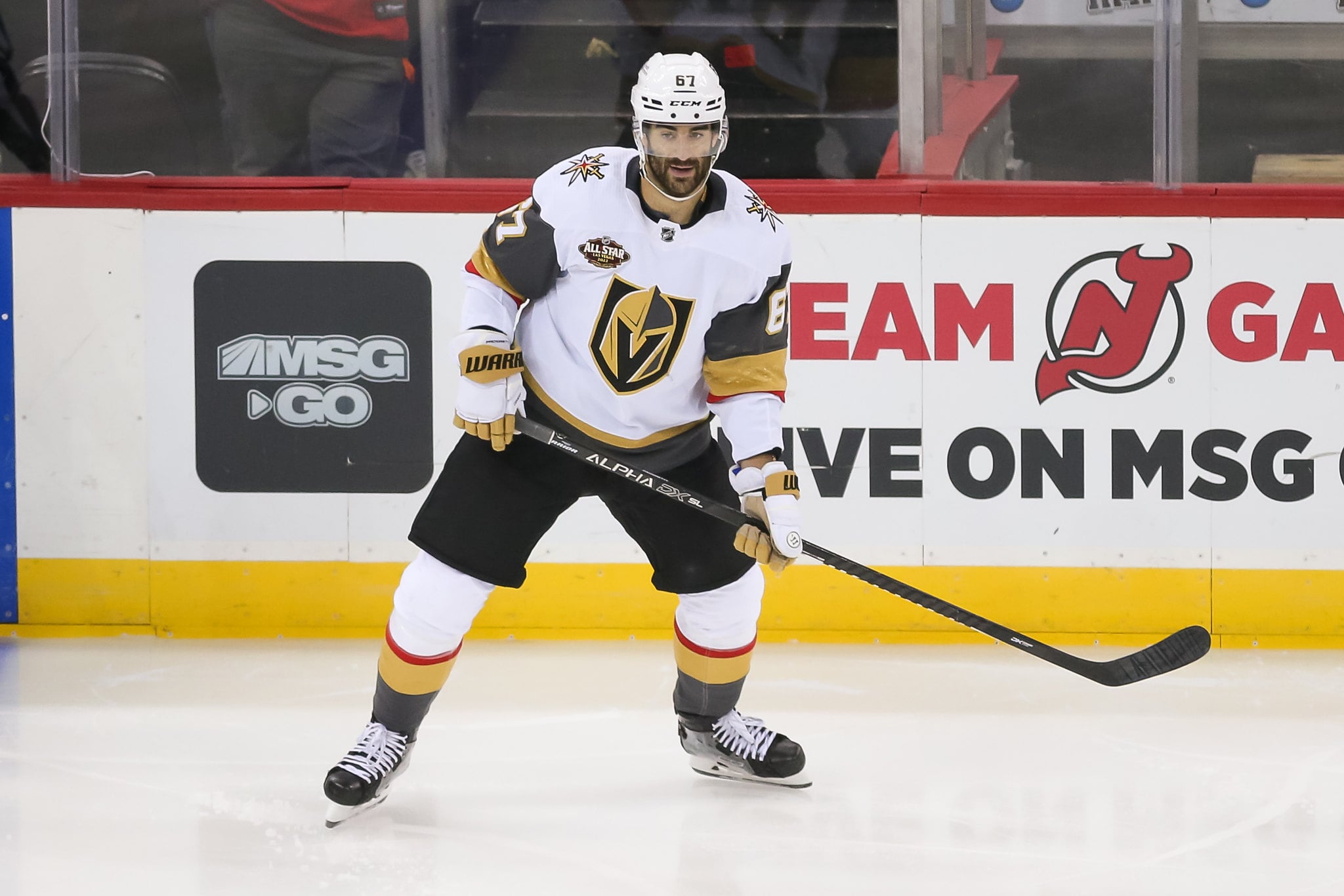
Leveraging the abundant draft capital and prospects acquired during the 2017 Expansion Draft, Vegas traded from a position of strength to add star power to an already formidable roster. This strategy also allowed them to sign Pacioretty to a lucrative contract extension, a financial move that would be unthinkable in today’s cap-constrained environment.
Beyond representing the franchise’s first true star forward—followed by Mark Stone’s arrival five months later—Pacioretty’s acquisition left Vegas with a still-impressive prospect pool, including Cody Glass. This depth made Suzuki a somewhat expendable asset in the eyes of the front office.
What Vegas Got
Injuries and the franchise’s eventual inability to capture its first championship have, to some degree, overshadowed just how impactful Pacioretty was during his time in Vegas. Following a minor dip in production during the 2018-19 season—where he recorded 22 goals and 40 points in 66 games—the 2012 Masterton Trophy winner rebounded spectacularly, amassing 56 goals and 117 points over his next two campaigns.
Even more significant were his postseason contributions. The New Canaan, Connecticut, native recorded 15 goals and 30 points across 36 playoff games as a Golden Knight. Ultimately, Pacioretty’s tenure in Las Vegas was shorter than many supporters would have preferred, as the club later traded him to the Carolina Hurricanes as part of a salary-cap adjustment.
What Vegas Gave Up
So, where did the misstep occur? Primarily in the development of Nick Suzuki. Suzuki has proven to be exactly the type of franchise cornerstone that Vegas envisioned when they selected him 13th overall in 2017. Over seven full NHL seasons, the 27-year-old center has demonstrated his value as both a prolific scorer (169 goals) and skilled playmaker (313 assists) across 540 games, while steadily improving his faceoff efficiency.
Under normal circumstances, watching Suzuki succeed in Montreal might have been acceptable for the Vegas front office; after all, investing time, energy, and resources into developing a player makes his subsequent success bittersweet but tolerable. However, the dynamics shifted dramatically during the 2021 postseason. Due to a pandemic-influenced divisional alignment, the Golden Knights found themselves facing the Canadiens in the Stanley Cup Semifinals.


As it turned out, the Canadiens pulled off a stunning 4-2 upset against the heavily favored Golden Knights, embarking on a fairytale playoff run that also saw them defeat the Toronto Maple Leafs and the Winnipeg Jets en route to the Stanley Cup Final. Despite finishing the regular season with the 18th-best record in the league, Suzuki played an integral role in Montreal’s success, recording 16 points—including a goal and four assists against his former team—in 22 playoff games.
The contributions of Tomas Tatar must also be factored into the equation. The veteran Slovak forward never quite found his footing in Vegas after being acquired at the 2018 trade deadline, but his career was revitalized in Montreal. During his first two seasons with the Canadiens, Tatar produced 47 goals and 119 points. In fact, his overall production across three seasons in Montreal—149 points in 198 games—was remarkably similar to Pacioretty’s output in Vegas (194 points in 224 games).
Through strategic draft-day maneuvering, Montreal successfully converted Vegas’s second-round selection into defensive prospects Mattias Norlinder and Jacob LaGuerrier. While Norlinder spent a brief period with the Canadiens’ NHL roster in 2021-22, he subsequently played primarily in the AHL before returning to Sweden. Meanwhile, LaGuerrier reached the AHL in 2020-21 and 2021-22, spent the 2022-23 season in the ECHL, and transitioned to university hockey for the 2023-24 and 2024-25 campaigns.
Who Won the Trade?
This transaction has clearly evolved over time, following the typical trajectory of a blockbuster veteran-for-prospects trade.
Although Montreal’s Cinderella Cup run eventually faded amid struggles in the 2021-22 season, Suzuki’s performance temporarily dipped before experiencing a major resurgence. He has since elevated his game to become a point-per-game player for the first time in the 2024-25 season.
However, this does not mean the deal can be classified as an outright win for Vegas. The natural fluctuations in the performance of both players, alongside the trajectories of their respective teams, highlight the immense complexity of evaluating trades. This particular transaction has proven to be a fascinating case study, and its legacy may continue to evolve in the years ahead!
What are your thoughts on this transaction? Which franchise do you believe has ultimately come out on top?
Also Read
- Winless Buccaneers Face Do-or-Die Thursday Night Test as Todd Bowles’ Job Security Hangs in Balance
- TNA iMPACT (10/1) Records Sharp Dip in Viewership & Demo Ratings
- Wasim Jaffer Urges Retention of Rohit Sharma as India’s ODI Captain Beyond 2026 Transition
- Jazz Chisholm Jr. Reaffirms Desire to Remain with Yankees Despite ALDS Sweep


