






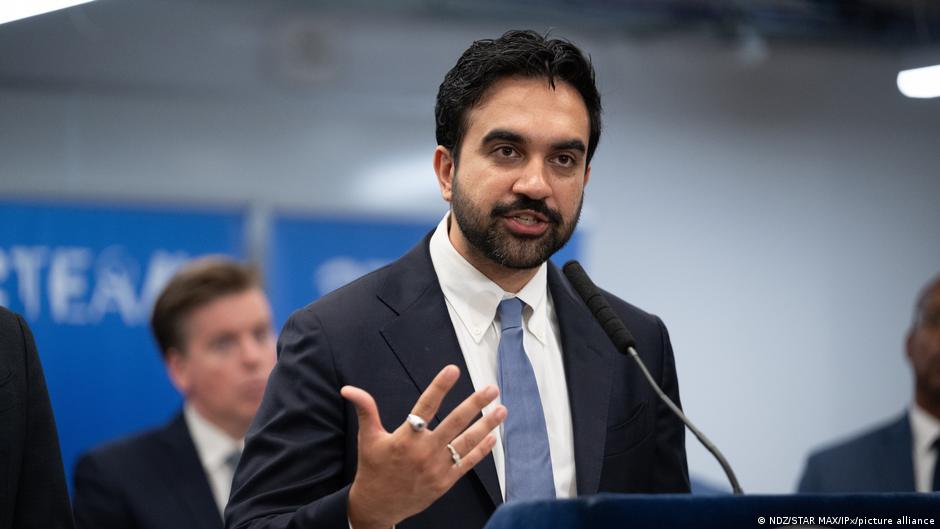
New York City public schools will implement a temporary prohibition on generative artificial intelligence tools for elementary and middle school students when the next academic year begins, Mayor Zohran Mamdani announced Wednesday.
Authorities have characterized this as the most comprehensive ban of its kind in the United States.
What do we know about the AI ban?
Under the one-year moratorium, student-facing generative AI software will be restricted for pupils through eighth grade, impacting approximately 600,000 public school students while officials examine the technology’s effects on children.
The city confirmed the policy will discontinue the use of around 40 educational AI tools currently utilized in classrooms, and companion chatbots will be prohibited across all grade levels.
High school students will not be subject to the full restriction, though the city will introduce biannual AI literacy courses for all high schoolers and establish pilot programs allowing selected students to access certain AI platforms under teacher supervision.
Educators will still be permitted to employ AI for lesson preparation and administrative duties like scheduling.
What did Mayor Mamdani say about the restrictions?
Mamdani emphasized the critical role of human connection in education: “Children need teachers and human connection in order to learn and grow. They need to develop skills alongside their peers, build relationships with educators and wrestle with tough problems on their own.”
He also connected the policy to the district’s broader educational philosophy, stating, “Each day when our children come to school, we teach them to ask questions, to challenge assumptions, to interrogate the premise, to ask why. When it comes to AI in our schools, we hold an obligation to do the same.”
New York’s decision reflects a nationwide trend as school districts across the country evaluate the benefits and risks of generative AI in classrooms.
AI knows what you did last summer
To view this video please enable JavaScript, and consider upgrading to a web browser that supports HTML5 video
Is New York alone in banning AI?
New York’s decision mirrors a nationwide trend as school districts across the country evaluate the benefits and risks of generative AI in classrooms.
A prominent example is Los Angeles Unified, the nation’s second-largest school district, which is also temporarily blocking generative AI tools on student devices across all grades while it formulates an official policy this year. LAUSD had previously prohibited devices for students below second grade and implemented screen-time limits as part of a broader policy adopted in June.
Similar to Los Angeles, New York is coupling its AI restrictions with broader technology limitations.
The new initiative also incorporates recommended screen time caps—30 minutes daily for third through fifth grades and 45 minutes for sixth through eighth grades—along with a citywide review of educational technology tools to remove those deemed unnecessary for learning.
According to the Associated Press, at least 37 states currently have some form of official AI guidance for schools, yet no uniform national standard exists for AI literacy instruction.
What has the reaction been?
The policy has garnered mixed responses from education and advocacy organizations. Michael Mulgrew, president of the United Federation of Teachers, praised the screen time limits but noted that the AI policy “leaves many questions unanswered,” including how the Education Department will guarantee that the tools it purchases incorporate sufficient safeguards, AP reported.
Landmark lawsuit against Meta kicks off in the US
To view this video please enable JavaScript, and consider upgrading to a web browser that supports HTML5 video
Josh Golin, executive director of the children’s advocacy group Fairplay, told AP that he desired a longer moratorium and more preparation time before the school year began, arguing that AI platforms should have to “demonstrate that their products are effective at teaching kids, that they’re safe, that they’re not displacing face-to-face interaction and that they’re not leading to rampant cheating.”
“A year to evaluate is not nearly enough time,” he said.
New York City’s approximately 1 million public school students are set to return to classrooms next week.
Also Read
- Financing Defense in an Era of Global Conflict: Strategies, Investment, and Economic Impact – OMFIF
- Real Madrid Boss Mourinho “Not Happy” With In Trouble Asencio
- India’s GDP Growth Sparks Debate Over Data Accuracy
- Mysterious Floating Island Reemerges Miles From Original Location in British Columbia Reservoir


