






Nigeria has emerged as Europe’s largest supplier of jet fuel over the past two months, surpassing the United States, according to global trade intelligence firm Kpler.
The 650,000 barrel-per-day Dangote refinery, owned by Africa’s wealthiest individual Aliko Dangote and located near Lagos, has become a critical fuel source for the continent following supply chain disruptions triggered by conflicts in the Middle East.
During the previous year’s summer peak, most jet fuel supplies originated from the Middle East. However, following the closure of the Strait of Hormuz earlier this year, Europe has relied on approximately 700,000 barrels per day in imports to meet aviation demand, turning increasingly to Nigerian sources.
European Supply Challenges
In April, International Energy Agency head Fatih Birol voiced concerns that Europe had only “perhaps six weeks” of jet fuel reserves remaining.
This shortage led to emergency measures in northern Italy, with airports in Bologna, Venice, Treviso, and Milan’s Linate implementing temporary jet fuel restrictions, capping usage at 2,000 liters per short-haul flight while prioritizing medical and long-haul operations.
Europe has managed to navigate the crisis by diversifying its energy sources and increasing imports from countries like Nigeria, though this shift has created unexpected consequences domestically.
Africa’s fuel crisis: Is Dangote the answer?
To view this video please enable JavaScript, and consider upgrading to a web browser that supports HTML5 video
Domestic Market Struggles Despite Production Surge
Nigeria now produces record volumes of jet fuel through the Dangote facility — approximately 24 million liters daily — much of which is exported to European markets.
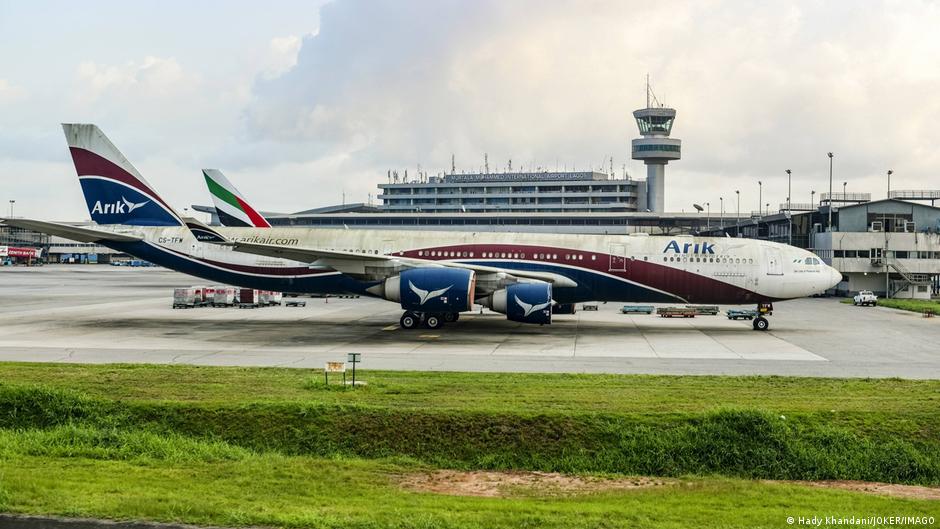
Nevertheless, domestic airlines continue facing operational challenges due to soaring fuel prices and competitive market dynamics.
Ikemesit Effiong, partner at SBM Intelligence consultancy, noted that “Nigeria operates a fully deregulated downstream market where Dangote prices its products based on international parity rather than preferential domestic rates.”
“Fuel flows to whoever pays the highest price,” he explained to DW. “Currently, that’s Europe, not Lagos.”
“The key lesson Nigerian stakeholders are learning is that production capacity alone doesn’t ensure domestic affordability.”
Despite the refinery’s role in improving overall fuel availability after decades of chronic shortages and long queues at gas stations, domestic prices remain among the highest on the African continent.
Local Aviation Sector Under Pressure
In Nigeria’s deregulated market, local airlines must compete with international buyers who typically order larger volumes and bypass intermediaries when dealing directly with refineries, according to Effiong.
“While domestic carriers may be geographically closer to the refinery, they’re economically disadvantaged in securing supplies,” he added. “They might as well be operating halfway around the globe.”
Local aviation operators have accumulated over 60 billion Naira ($45 million) in debt to banks since the crisis began, straining their ability to maintain operations.
Many airlines have been forced to reduce route networks and increase ticket prices, leading to passenger frustration and widespread flight cancellations and delays.
JEt fuel prices initially tripled following the onset of the Iran conflict but have since stabilized at roughly 1,600 Naira per liter, compared to approximately 900 Naira before the crisis.
Why Nigeria’s largest refinery is importing US oil
To view this video please enable JavaScript, and consider upgrading to a web browser that supports HTML5 video
Distribution Costs Drive Pricing Issues
Charles Victor, a Lagos-based energy analyst, emphasized that supply chain inefficiencies significantly impact final fuel costs. “[T]he journey from refinery to airport involves multiple expense layers — storage, coastal transportation, tank transfers, and various intermediaries — each adding markups,” he explained.
“The core issue isn’t supply — it’s the pricing mechanism throughout the distribution chain.”
Policy Solutions Proposed
Victor suggests reserving monthly fuel allocations specifically for Nigerian airlines, sold directly to domestic operators to eliminate middleman costs.
“Purchasing directly from the refinery gate, when feasible, eliminates most intermediary margins,” he told DW. “Wholesale prices could stabilize around 1,200 Naira per liter through such measures.”
This approach would require infrastructure investments in airport storage and distribution systems to reduce logistics expenses, alongside government policies fostering sustainable partnerships between Dangote Refinery and local carriers, according to Ikemesit.
Despite operating at full capacity with plans to position Nigeria as a refined product exporter, Dangote Refinery faces pressure from global market demands that may undermine domestic energy security objectives.
Edited by: Sertan Sanderson
Also Read
- International Bank of Azerbaijan Acquires Controlling Stake in Davr Bank, Marking Major Expansion into Uzbekistan
- Navy Launches Defense Industrial Base Office to Strengthen Supply Chain and Accelerate Technology Adoption
- Daiwa Securities Subsidiary Partners with Australian VC to Fund AI and Quantum Startups
- Lawyers for Andrew Tate Argue Social Media Posts Were Exaggerated, Not Proof of Wealth


