






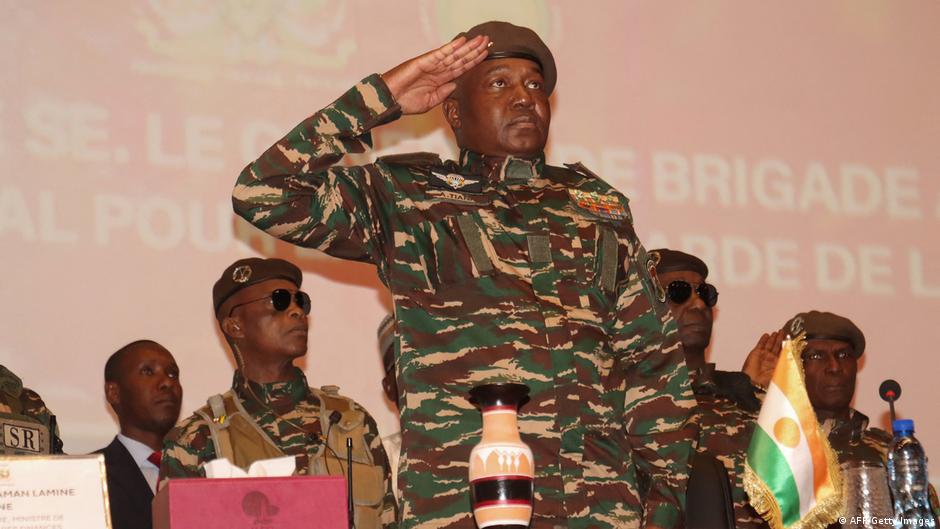
On July 26, 2023, the Nigerien armed forces seized control of the government. General Abdourahamane Tchiani, now head of state, argued that the coup was necessary due to a deteriorating security environment that had persisted despite assistance from abroad.
Shortly thereafter, the junta declared a transition plan intended to run for no more than three years.
Yet many of the pledges made at the outset have not materialized. The interim authority retains full control, and the overall security climate in the Sahel nation remains precarious.
In the Tillabery region of southwestern Niger, jihadist assaults have intensified, displacing thousands of villagers and creating a deepening humanitarian emergency.
‘Attacks on both the military and civilians have become far more frequent and severe than they were three years ago,’ Maiga, a resident of Tera—a city of roughly 30,000—reported to DW. For safety reasons, Maiga asked to remain anonymous.
‘Life was once more stable, with regular market activity and steady supplies,’ he recalled, noting that today entire villages have been emptied and schools stand shuttered.
The independent monitor ACLED has likewise warned that security conditions have worsened since the 2023 coup.
The group reports that Tillabery continues to be the primary flashpoint for confrontations between the jihadist factions Jama’at Nusrat al‑Islam wal‑Muslimin and the Islamic State in the Sahel Province (formerly ISGS), a rivalry that has caused many soldier and civilian casualties.
In 2025, close to 1,200 fatalities were recorded in the area, underscoring the magnitude of Niger’s security crisis, according to Heni Nsaibia, an ACLED analyst.
The latest high‑profile attack, which occurred on July 17, resulted in the deaths of at least 16 soldiers and an estimated 15 militants, as reported by Niger’s state news agency, ANP.
‘The security landscape in Niger has deteriorated, especially in Tillabery, where the death count is the highest in the central Sahel,’ Nsaibia told DW.
Insecurity taking a toll on civilians
‘We live in improvised shelters and are exposed to the elements; many of us take on informal jobs just to survive,’ a woman told DW.
‘I used to earn a dignified living from my work, but now it is extremely difficult; even obtaining drinking water has become a challenge,’ a local herder added.
Young Nigeriens oscillate between disappointment and hope; in youth assemblies known as ‘Fadas,’ discussions about the nation’s future persist. Figures such as Fadila argue that conditions are slowly improving after the initial upheaval.
‘It was tough for a while—salary delays and food shortages were common—but in recent months conditions have generally improved,’ Fadila told DW.
General Tchiani has stressed that youth can now re‑enter political life. ‘Before the coup, young people were excluded from decision‑making bodies,’ he said, adding that an advisory council now includes youth representatives, ensuring their concerns are considered in policy discussions.
Just two days after President Mohamed Bazoum was removed in 2023, junta leader Tchiani unveiled plans to fight corruption and stimulate economic growth.
Three years on, Niger’s populace remains no better off, observed Tahirou Garka, a confidant of Bazoum and spokesperson for the G25 coalition advocating a return to constitutional rule.
‘They have failed economically and socially,’ he asserted, referring to the ruling junta. ‘People are struggling to secure drinking water, electricity, and fuel,’ he added.
What is the Alliance of Democrats for the Sahel?
To view this video please enable JavaScript, and consider upgrading to a web browser that supports HTML5 video
Hamani Oumarou of LASDEL, a research institute in Niamey, offers a contrasting perspective. He argues that the socioeconomic situation has improved for many Nigeriens, particularly those outside the middle class and elite.
‘Households with low incomes now have more resources to feed their families,’ Oumarou told DW. Nonetheless, Niger periodically relies on food imports, which drives price spikes.
Rebuilding ties with ECOWAS
Together with Mali and Burkina Faso, Niger is a founding member of the Alliance of Sahel States (AES), created in 2023 after the three nations withdrew from the West African regional bloc ECOWAS.
The AES has turned away from Western partners and is cultivating closer relations with Russia.
Pape Ibrahima Kane, an authority on international organizations, now hopes for a rapprochement between AES members and their traditional West African partners.
He notes an encouraging development: former Guinean Prime Minister Lansana Kouyate was recently elected as ECOWAS’s chief negotiator. According to Kane, the AES appears to have accepted Kouyate’s role.
‘We are at the start of a promising process, with both sides genuinely aligned on initiating dialogue,’ he told DW.
He also emphasizes that economic negotiations are crucial; Niger relies on access to Benin’s port and electricity from Nigeria and Benin, both ECOWAS members.
Reliou Koubakin and Ali Abdou contributed to this article, which was originally written in German.
Correction, July 24, 2026: A previous version of this article stated that Lansana Kouyate is Guinea’s current prime minister. This has been corrected.


