



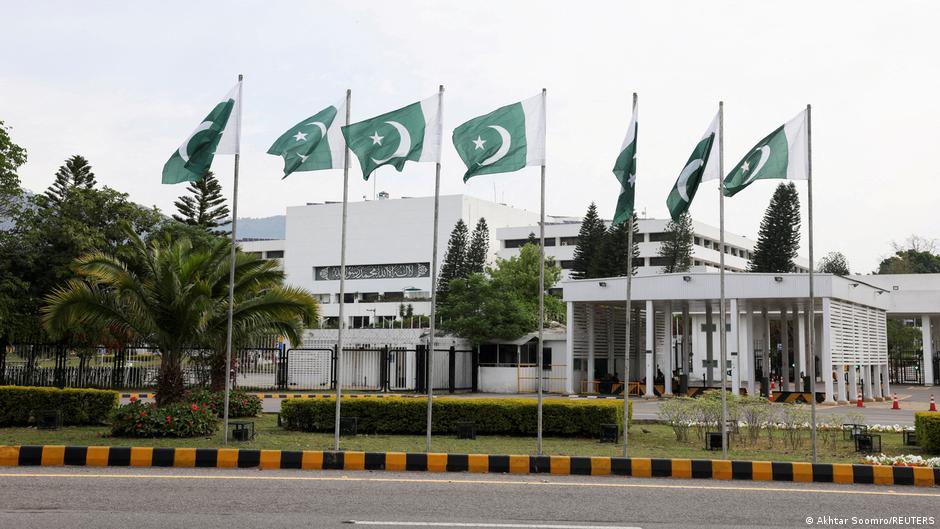
A contentious debate has resurfaced in Pakistan regarding whether its existing four-province structure can effectively manage a population of approximately 260 million.
Planning and Development Minister Ahsan Iqbal recently called for a national discussion on administrative reform, proposing either the creation of 12 to 15 new provinces or the establishment of 160 empowered district governments to enhance governance and public service delivery.
Interior Minister Mohsin Naqvi, who initially raised the idea of an administrative “reset” in July, stated on Saturday that any new administrative units must be established with public backing.
Meanwhile, Defense Minister Khawaja Asif has advocated for increased decentralization and the devolution of power to local levels.
Despite the increasing calls for new provinces, no formal decision has been made.
Even within the ruling coalition, there is disagreement over how and when such reforms should be pursued.
Questions also persist over whether smaller provinces improve governance, or if directly devolving power to local governments would be more effective.
Basmati rice: India, Pakistan and the EU dispute
To view this video please enable JavaScript, and consider upgrading to a web browser that supports HTML5 video
More provinces, better governance?
While Pakistanis generally agree that the nation needs more responsive and effective governance, many doubt that creating more provinces is the answer.
“Smaller provinces are not a substitute for empowered local governments. Even with smaller provinces, you still need empowered local governments to make the system effective and improve service delivery,” Miftah Ismail, a former finance minister and economist, told DW.
Supporters of creating more provinces argue that Pakistan’s four existing provinces — Punjab, Sindh, Khyber Pakhtunkhwa, and Balochistan — have become too large and overly centralized.
Iqbal, the planning minister, argues that the existing system has failed to deliver adequate improvements in health, education, and other social services.
Interior Minister Naqvi, on the other hand, has called for an administrative structure better suited to Pakistan’s growing population.
However, there is disagreement over the solution.
“Without effective local governments, whether there is one province or 25, decision-making will remain centralized at the provincial level,” Abid Qaiyum Suleri, executive director of the Sustainable Development Policy Institute, told DW.
He stated that any proposal for new provinces or administrative units should be evaluated based on potential improvements in local tax collection and the costs of establishing new provincial institutions, including secretariats, assemblies, and bureaucracies.
Suleri stressed that it should also be examined whether such changes would deliver justice and public services more effectively.
Altering the political balance
“Pakistan’s history suggests that empowering local governments is a better choice in terms of governance and service provision,” Muhammad Shoaib, a political scientist and assistant professor at Quaid-i-Azam University, told DW.
Therefore, the debate is not simply about how many provinces Pakistan should have, but whether creating smaller units would actually make the government more responsive to citizens.
Creating new provinces could also affect the country’s political balance.
New provinces would mean new governments and assemblies, potentially altering political representation and the distribution of federal resources.
Any attempt to redraw boundaries could also reopen disputes over water, taxation, and natural resources.
Political resistance has already begun, with Sindh’s provincial assembly opposing the creation of new provinces or administrative units, while political groups have warned against dividing existing territories.
Can Pakistan still help end the US-Iran war?
To view this video please enable JavaScript, and consider upgrading to a web browser that supports HTML5 video
A risky strategy?
Shoaib said dividing resources would present a major challenge, even if all provinces were reorganized simultaneously.
“Even if all provinces are divided simultaneously, the division of resources like finances, water, and jobs, and special privileges for territories within provinces will be a challenge,” he said.
“Challenges like these require lengthy negotiations and compromises to achieve political consensus,” he added.
The issue is therefore not only about administrative efficiency, as redrawing provincial boundaries could also redistribute political and economic power.
Ismail believes redrawing provincial boundaries would be risky, particularly in Sindh.
He said empowering existing local governments within current provincial boundaries would be a safer option.
“We can learn from the US and the southern states of India, where empowered small administrative units, while competing with each other, are more responsive to citizens and deliver better services,” Ismail said.
Why Pakistan may be too reliant on EU trade
To view this video please enable JavaScript, and consider upgrading to a web browser that supports HTML5 video
Shoaib said Pakistan could also learn from other countries, particularly democratic systems that have empowered local governments and taken time to work through the division of large states into smaller units.
“In Pakistan’s case, the risk of resistance and perpetual resentment is real. A partially finished division will aggravate existing ethnic tensions,” he said.
For Pakistan, the debate is therefore about more than whether the country should have four provinces or 12 or 15.
It is about whether changing the administrative map can actually bring power, resources, and accountability closer to its people, and whether such a transformation can be achieved without creating new political and ethnic tensions.
Also Read
- Daba Finance Partners with Coronation to Broaden International Access to Nigerian Capital Markets
- Caterpillar’s $72 Billion Backlog Signals a Paradigm Shift Away from Traditional Construction
- Syria’s Destroyed Reactor Capable of Producing Weapons-Grade Material, IAEA Chief Reports
- Avalanche on Mount Mizhirgi Claims 11 Lives Among Climbers in Southern Russia