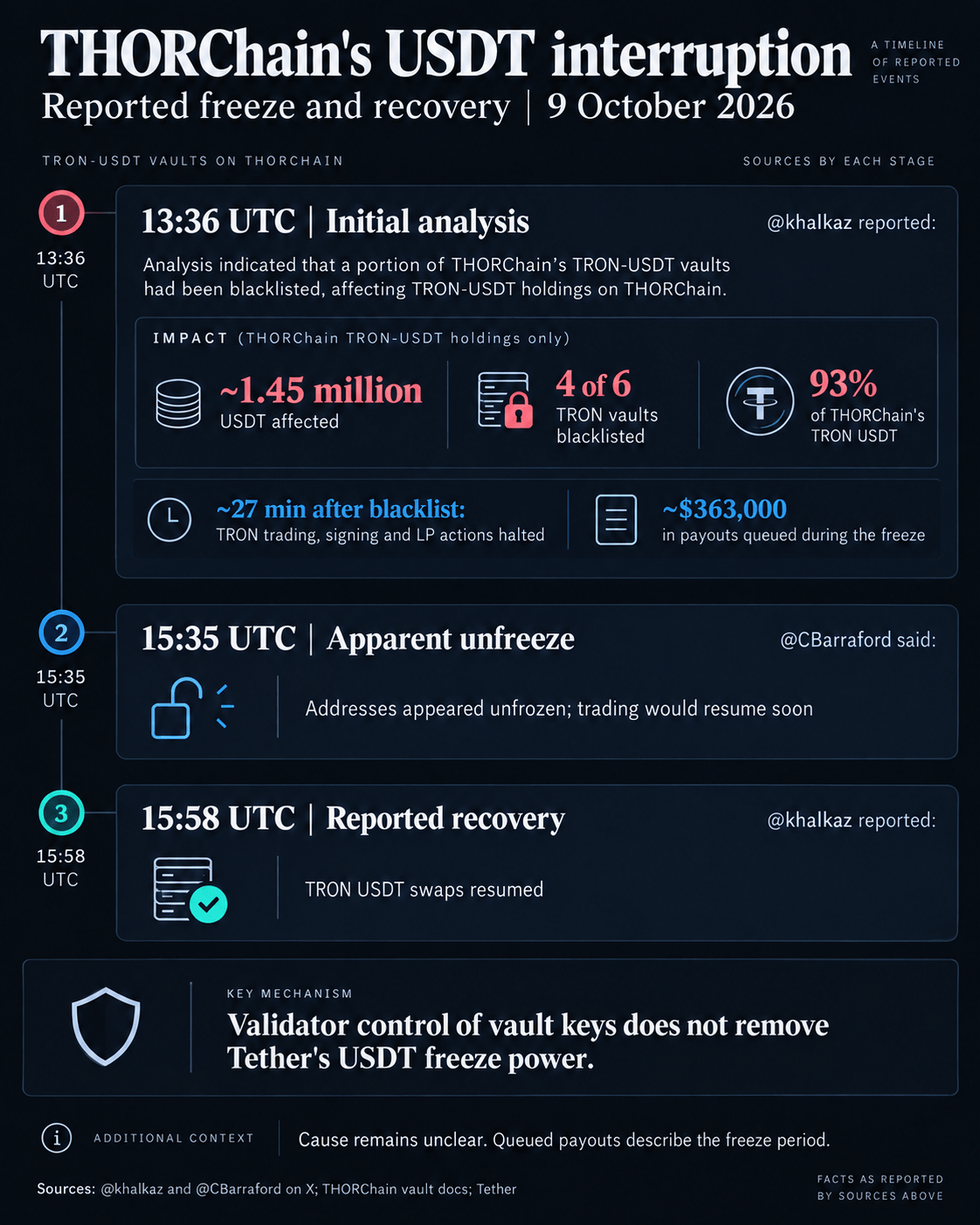





On Oct. 9, THORChain’s TRON operations were halted following a USDT vault blocklist, as reported by co‑founder Chad Barraford and researcher Khal. The freeze impacted approximately $1.45 million in USDT.
Both parties soon lifted the restrictions. By 15:35 UTC Barraford indicated the addresses were unfrozen and trading would restart shortly. At 15:58 UTC Khal reported that TRON USDT swaps had resumed. Earlier reports had described the queue of payouts that were paused during the freeze.
Khal’s initial analysis revealed that block 86958330 blacklisted four of THORChain’s six TRON vaults. Those vaults held roughly 93 % of the protocol’s TRON‑USDT balance, concentrating the disruption in the assets required for payment processing.
The freeze caused TRON trading, transaction signing and liquidity‑provider actions to cease for about 27 minutes, with roughly $363,000 in payouts remaining queued.
Barraford stated that the protocol had received no prior notice and was unaware of the reason for the freeze. Khal suggested the vaults may have been inadvertently included in a wider blocklist affecting roughly 30 additional wallets.
The episode follows ongoing scrutiny of how THORChain manages potentially illicit activity. On Oct. 8, a spike in THORChain’s September trading volume coincided with activity linked to the Bitget hack, prompting the protocol to decline selective address blocking.
Two layers of control
THORChain’s vault documentation outlines accounts operated by validator nodes that store assets on external blockchains and facilitate both inbound deposits and outbound transfers.
Control of these accounts is distributed among validators, determining which entities can authorize payments, whereas the underlying tokens remain subject to the issuing entity’s restrictions.
In an Oct. 1 blog post, THORChain emphasized a key distinction: node operators can pause an entire chain or the protocol for safety reasons, but cannot single out and remove an individual swap.
Meanwhile, Tether indicates its wallet‑freezing policy aligns with OFAC sanctions and covers secondary‑market wallets. Its authority to restrict USDT transfers operates independently of the validator controls that govern THORChain’s vaults.
While transaction‑signing authority is distributed, this does not diminish Tether’s ability to freeze USDT held within the affected accounts.