The Minnesota Wild’s offseason has been relatively quiet, save for negotiations surrounding a contract extension for defenseman Quinn Hughes. The specific terms he ultimately accepts and his placement on the team’s salary list remain to be determined.
Hughes is set to play the final year of his current deal, which pays $7.85 million. Given his proven performance, this figure represents a significant undervaluation of his market value.
Nevertheless, attention now turns to the contracts that have proven more problematic for Minnesota.
Wild’s Eriksson Ek Needed in Lineup
When the contract was signed in July 2021, Joel Eriksson Ek’s deal appeared favorable. However, recurring injuries have turned it into a liability for the Wild. Despite never completing a full NHL season, his physical style — particularly his willingness to operate in front of the net — has contributed to durability concerns. Although the team values his approach and does not intend to alter it, his $5.25 million annual salary becomes increasingly difficult to justify given the extent of his absences.
This past season showed improvement, with Eriksson Ek appearing in 70 games and recording 51 points. Nonetheless, he missed 12 contests, and the team could have benefited from his presence during those stretches, especially when compared with the 36 games he missed in the preceding season.
Critics may question why this contract is listed among the worst for the upcoming season, yet over the course of a decade he has never completed an 82‑game schedule, and projections suggest another injury‑prone campaign is likely. The organization hopes he can remain healthy and deliver a season that justifies his compensation, but a $5 million price tag for a player with persistent durability issues is challenging.
Wild’s Brodin Same Boat as Eriksson Ek
Jonas Brodin shares several characteristics with Eriksson Ek: both are Swedish, excel when healthy, and are plagued by recurring injuries. Brodin is four years older and has already logged a complete 82‑game season, whereas Eriksson Ek has not. While Brodin’s point totals are lower than Eriksson Ek’s, he functions primarily as a defenseman and is not expected to be a primary scorer. He commands a slightly higher salary of $6 million per season.

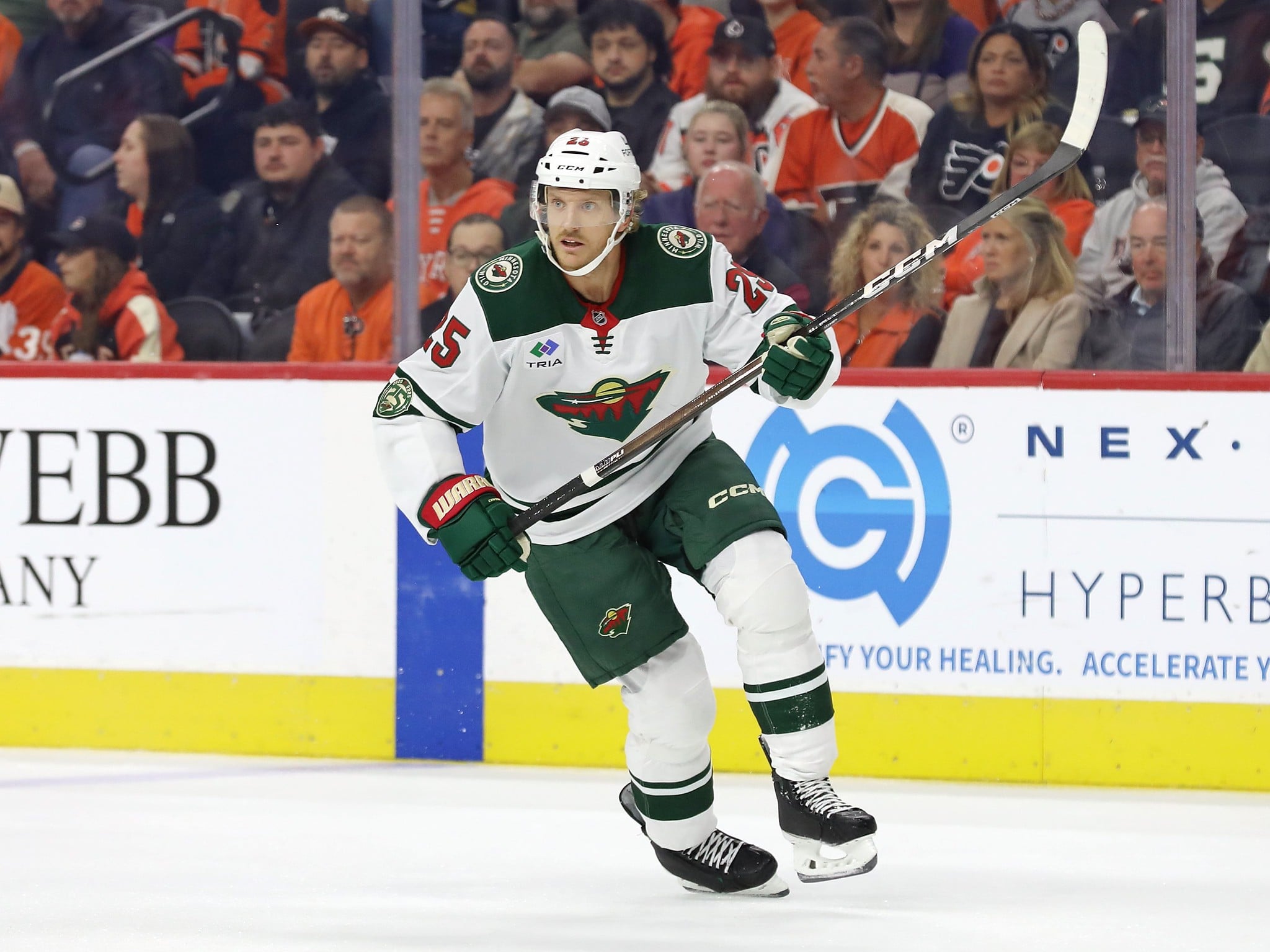
At $6 million annually, Brodin’s contract, signed in 2020, was initially viewed as a solid investment for a defenseman capable of generating roughly 30 points in a productive season. While his offensive output is modest, his consistency and reliability made him a cornerstone of the blue line.
Nevertheless, injuries have continued to hinder Brodin, most notably during the postseason when both he and Eriksson Ek were unavailable for the second‑round series against the Colorado Avalanche, a loss that was felt heavily by the team. While his $6 million cap hit appears modest relative to league‑wide salaries, the frequency of his absences diminishes the perceived value of the contract, placing it among the Wild’s less favorable deals.
Kaprizov’s Tricky Situation
Assessing Kaprizov’s new contract is premature, yet the prospect of committing $17 million annually gives cause for concern. As one of the franchise’s premier players, his compensation reflects his stature, but the figure seems steep at this early stage. Moreover, league‑wide market trends suggest that such a salary will soon be viewed as average, especially as other star players secure higher deals.
Despite a history of occasional injuries, Kaprizov has generally recovered effectively. He arguably merits the highest salary on the roster, barring any impending agreement for Quinn Hughes. Nonetheless, a $17 million annual cap hit presents a financial challenge for the Wild, limiting flexibility in allocated cap space for other acquisitions.
While the contract’s long‑term value may diminish, the immediate concern is its potential to become an outlier if Kaprizov fails to rank among the NHL’s top five scorers by season’s end. In such a scenario, many observers could deem the deal overpriced relative to production. The team acted prudently in securing its star, but the onus is now on Kaprizov to justify the investment.
The contracts of Eriksson Ek and Brodin are especially problematic due to their near‑ubiquitous injury histories, which have prevented them from ever completing a full 82‑game schedule. The organization hopes both can achieve full health, while Kaprizov must demonstrate that his compensation aligns with his performance, as his current salary already influences the team’s ability to attract additional talent. If Eriksson Ek and Brodin stay healthy and Kaprizov meets expectations, the Wild stand a better chance of sustained success.
*Contract information courtesy of PuckPedia.com*