






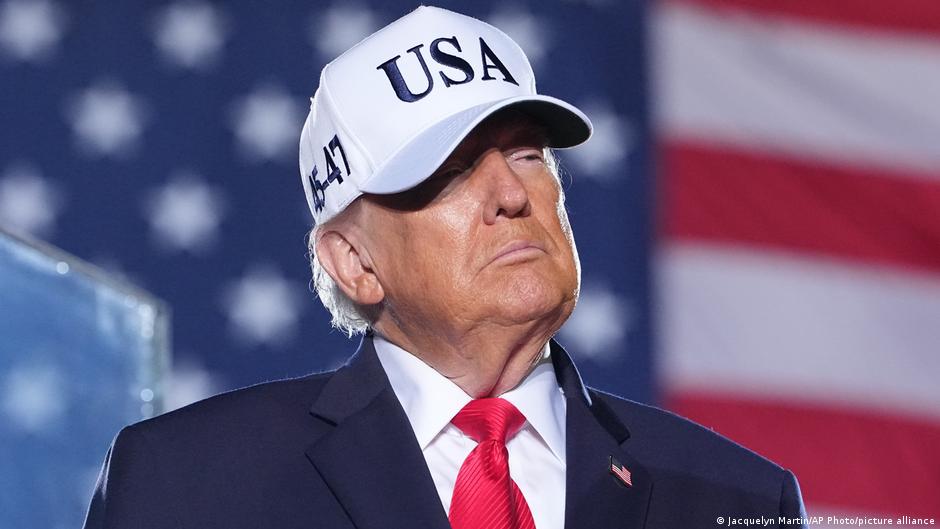
The outcome of the US midterm elections will define the nation’s political landscape for years to come, sending ripples across the global stage. Policy decisions made in Washington carry profound consequences, directly impacting American adversaries like Iran while heavily influencing support for nations like Ukraine, which is actively seeking increased assistance.
President Donald Trump does not hold unilateral authority over military deployments or the allocation of foreign financial and military aid. Although the executive branch grants the US president more power than in parliamentary systems like Germany, governance is far from a solo endeavor—checks and balances remain deeply embedded in the American system.
The House of Representatives and the Senate—the two chambers of Congress where the Democratic Party secured a clear majority—wield substantial legislative influence. Responsible for crafting laws and approving government spending, Congress serves as a vital counterweight to the president and oversight bodies like the intelligence agencies.
While the president possesses the power to veto legislation, Congress can override such vetoes with a two-thirds majority in both chambers. Beyond legislative overrides, the legislature holds the power of impeachment and controls key appointments, ensuring that Cabinet members, US ambassadors, and federal judges are selected from a slate of nominees approved by the Senate.
During the 2024 US elections, the Republican Party secured not only the presidency under Trump but also control of both chambers of Congress, streamlining the president’s ability to govern.
The Democrats’ resounding midterm victory has now flipped control of both chambers, fundamentally altering the legislative landscape and potentially redirecting key foreign policy initiatives.
Will Ukraine Benefit from a Democratic Congress?
Under the Biden administration, the US stood as a reliable partner alongside Europe, providing Ukraine with critical financial aid, military expertise, and massive shipments of weaponry following Russia’s full-scale invasion.
This stance shifted dramatically under the Trump administration. Ukrainian President Volodymyr Zelenskyy faced a notably chilly reception during his 2025 White House visit, with Trump openly stating that he maintains better relations with Russian President Vladimir Putin than with his Ukrainian counterpart.
The US has suspended sanctions on Russia and scaled back financial and military assistance to Ukraine. Now that Democrats hold majorities in both congressional chambers, they can prioritize increased support for Kyiv on the legislative agenda.
“Democrats have criticized the Trump administration for not doing enough to support Ukraine,” Brandon Conradis, a former DW journalist and editor at Bloomberg Government, noted. “With congressional majorities, they can push legislation aimed at delivering more substantial aid to Ukraine.”
Should Trump veto such legislative efforts, the outcome would hinge on the balance of power in Congress. However, a two-thirds majority in both chambers could override his veto, particularly if it garners support from bipartisan quarters.
Is Trump trying to end the war in Ukraine, or helping Putin win it?
To view this video please enable JavaScript, and consider upgrading to a web browser that supports HTML5 video
Can Congressional Democrats Restrain the Iran War?
Trump launched military operations against Iran alongside Israel on February 28, 2026, without congressional consultation. Under the US Constitution, a formal declaration of war requires congressional approval. Democrats have repeatedly voted against the conflict and joined forces with some Republicans to pass resolutions calling for an end to the hostilities—though the Trump administration has largely ignored these measures.
“I don’t think Congress will have huge powers here,” Michael O’Hanlon, director of foreign policy research at the Brookings Institution, remarked before the midterms. However, he noted that Congress could still curb major escalations by withholding funding for military expansions.
The Future of US Development Aid Post-Midterms
US-backed aid initiatives tackling global challenges like Ebola, AIDS, and hunger suffered severe cutbacks shortly after President Trump began his second term. Among the most significant moves, the administration shut down USAID, the primary agency overseeing foreign development assistance.
How USAID cuts could result in higher HIV transmission
To view this video please enable JavaScript, and consider upgrading to a web browser that supports HTML5 video
Whether a Democratic-controlled Congress could “reactivate” USAID against the president’s wishes remains highly uncertain. However, lawmakers could push for increased aid spending and launch investigations into the controversial closure of the agency.
“Democrats would leverage their oversight powers to scrutinize the closure of USAID,” Conradis explained. “We can expect high-profile hearings, forcing officials deemed responsible to testify before Congress.”
Ultimately, the United States remains under a Republican presidency, meaning a complete policy reversal is unlikely. “A Democratic Congress won’t magically reverse everything overnight. Yet, shifts in power dynamics will inevitably lead to key changes in how the executive branch operates.”
Also Read
- Balancing Authority: Governments vs. Corporate Influence in Today’s Landscape
- Israeli President Herzog Denounces Racist Rhetoric Targeting Arab Citizens During Election Period
- RBA Rates Peak but Relief Delayed by Nearly a Year, Economists Warn
- Live Stream: CAF Beach Soccer Africa Cup of Nations Senegal 2026 Draw Scheduled for Wednesday


