






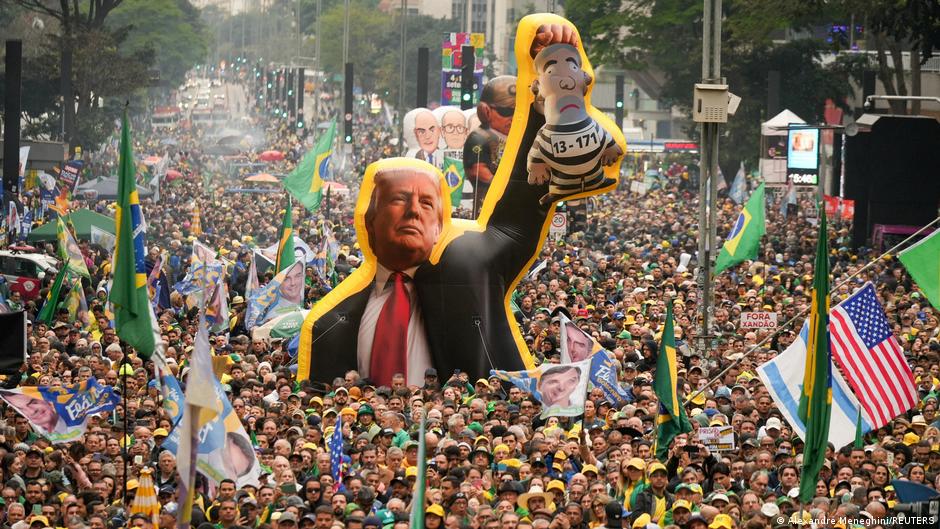
With the U.S. midterm elections approaching on November 3, President Donald Trump’s Republican Party is fighting to retain its congressional majority. Yet beyond America’s borders, recent election results have already dealt a blow to the president’s international network.
Voters in both Serbia and Brazil delivered victories to left-leaning candidates, outcomes that—while having no direct bearing on the U.S. midterms—represent significant diplomatic setbacks for Trump. The triumph of the Student List in Serbia and the re-election of incumbent Luiz Inácio Lula da Silva in Brazil have removed two sympathetic leaders from the global stage.
In Belgrade, Trump has lost a key European partner in outgoing President Aleksandar Vučić. Meanwhile in Brasília, the Trump camp had pinned its hopes on a victory for Flávio Bolsonaro.
“Trump was a strong supporter of both Jair Bolsonaro—the Trump-like figure who preceded Lula until his 2022 defeat—and his son Flávio,” says Lawrence J. Haas, a senior fellow at the American Foreign Policy Council and former communications director for Vice President Al Gore. “Trump was displeased by the defeats of both Bolsonaros, and he holds no warmth for Lula. Consequently, bilateral relations are likely to remain cool at best.”
Trump declared Brazilian election looked “rigged”
Flávio Bolsonaro currently faces investigation in Brazil over allegations of corruption and money laundering. Following his electoral loss, he departed for Florida, where the U.S. State Department granted entry visas to him and his family despite the pending legal proceedings.
Bolsonaro has refused to concede, alleging voting irregularities—a stance echoing Trump’s own baseless claims that the 2020 U.S. election was “stolen” by Joe Biden and the Democrats. Trump’s reaction to the Brazilian result mirrored his domestic rhetoric. “It looked like another rigged election, frankly,” the U.S. president stated on Monday. “Elections have to be indisputable—and it looked very bad to me.”
How secure are the US midterm elections?
To view this video please enable JavaScript, and consider upgrading to a web browser that supports HTML5 video
Good relations with Putin ally Vucic
Aleksandar Vučić governed Serbia with an iron fist as president from 2017 until recently stepping down to run for prime minister, a post he previously held from 2014 to 2017. Vučić has frequently described himself and Trump as kindred spirits. Donald Trump Jr. visited Vučić in Belgrade shortly before the 2020 U.S. presidential election and again months later.
The Conservative Political Action Conference (CPAC), closely aligned with Trump’s “Make America Great Again” movement, had announced plans for a November gathering in Belgrade featuring Vučić as a keynote speaker. It remains uncertain if that event will proceed.
Another shared trait between Vučić and Trump is a markedly friendlier stance toward Russian President Vladimir Putin compared to most European leaders. Vučić declined to join EU sanctions against Russia following its invasion of Ukraine; Belgrade continues to purchase Russian raw materials, and state media under Vučić offered a more favorable portrayal of Moscow than of Brussels.
Trump, too, has signaled a shift toward Moscow. His special envoy, Steve Witkoff, recently characterized Putin as a “humanitarian,” while Trump himself acknowledged in an interview that he maintains a better rapport with Putin than with Ukrainian President Volodymyr Zelenskyy. Vučić’s departure removes one of the few European leaders who shared Trump’s perspective on Russia.
Is Trump trying to end the war in Ukraine, or helping Putin win it?
To view this video please enable JavaScript, and consider upgrading to a web browser that supports HTML5 video
Israel: Outcome still unclear
There remains a possibility of an Israeli election outcome favorable to Trump. With over 96% of votes tallied, the right-wing bloc led by Prime Minister Benjamin Netanyahu holds a lead. However, Netanyahu—long a close Trump ally—has lost his parliamentary majority, setting the stage for difficult coalition negotiations.
The Trump-Netanyahu alliance dates back years. In 2018, during his first term, Trump relocated the U.S. embassy from Tel Aviv to Jerusalem, a controversial move given both Israelis and Palestinians claim the city as their capital. Netanyahu’s camp embraced the decision.
Today, the United States remains Israel’s paramount partner, while Israel serves as a critical regional ally for Washington. The trajectory of this relationship under a different Israeli government is uncertain. Should Netanyahu retain power, the status quo will likely persist.
No rosy prospects for Trump in the midterms
Vučić’s defeat costs Trump a loyal international partner, while Lula’s victory ensures a leader Trump views unfavorably remains in the Brazilian presidency. According to analyst Haas, however, these foreign developments will not sway the crucial U.S. midterms. “Americans will be voting based on issues that affect them directly and their feelings toward the party in power,” he explained.
Domestic indicators are also troubling for the president. “Trump has the lowest approval rating of any president on the eve of a midterm election since Harry Truman in 1946,” Haas noted. “Voters are deeply concerned about affordability and strongly oppose the U.S.-Iran conflict.”
Also Read
- Iran Labels British Navy, Air Force as Terrorist Groups in Retaliation for IRGC Designation
- Barcelona Reclaim La Liga Summit with Dominant 6-1 Win Over Alaves
- Opposition Alliance Renews Demands for Election Commissioner’s Resignation Amid Voter Roll Controversy
- President Trump Attends Halloween Celebration as Himself, Declares No Immediate Action on Iran


