






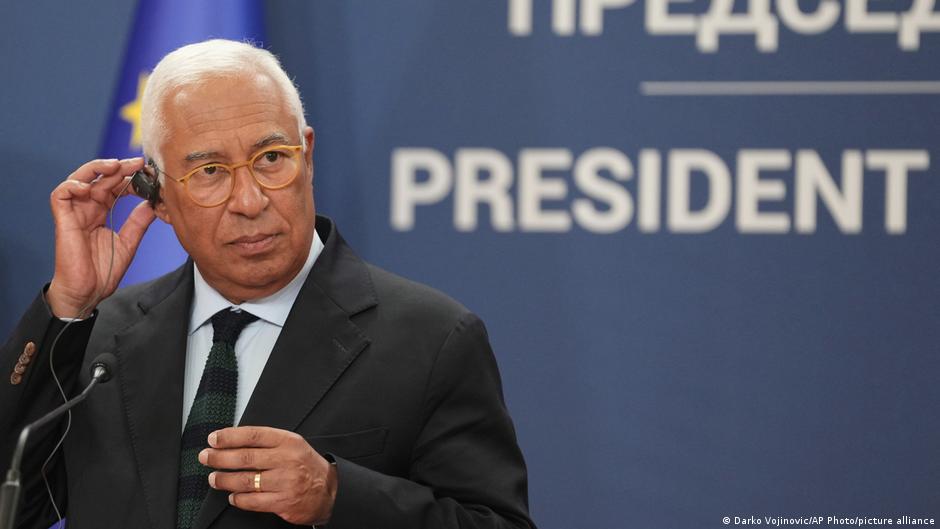
The European Union must accelerate the accession process for its six Western Balkan candidate states, European Council President Antonio Costa declared on Thursday.
“For us, enlargement of the Western Balkans represents the European Union’s foremost geopolitical investment,” Costa stated during a joint press briefing with Serbian President Aleksandar Vucic in Belgrade.
Albania, Bosnia-Herzegovina, Kosovo, North Macedonia, Serbia and Montenegro have pursued EU membership for years, yet they remain incomplete in meeting the accession criteria.
EU Leaders Convene to Accelerate and Improve the Accession Process
“Tomorrow, European leaders will meet with their Western Balkan counterparts to refine our approach and expedite progress,” Costa remarked, emphasizing that this does not entail easing requirements.
He added that fostering mutual trust is essential, and that both the candidate nations and the EU must avoid frustration.
“Enlargement is not a distant dream but an achievable goal in the coming years,” Costa affirmed, urging accelerated effort.
The EU-Western Balkans summit commences in Tivat, Montenegro, on Friday, offering leaders a chance to evaluate advances toward accession.
Costa has been touring Western Balkan candidate states ahead of the Tivat summit and, on Thursday, urged Serbia’s president to strengthen democratic reforms and align foreign policy with EU standards.
Belgrade has been cautioned that it may forfeit roughly €1.5 billion ($1.8 billion) in EU funding if it fails to curb democratic backsliding.
Tensions between candidate states
In addition, divergent interests among the candidate states risk detracting from the summit’s agenda.
On Wednesday, Montenegro barred 87 Serbian nationals from entry, citing security concerns after they arrived in Tivat on an Air Serbia flight carrying communication devices and banners proclaiming “Serbia wins.”
Following the ban, Serbia’s security agency cautioned Vucic against attending Friday’s summit, warning of potential security risks.
The Serbian Security and Information Agency (BIA) warned on Wednesday that a visit to Montenegro poses a high security risk for Vucic, citing “hostile activities by foreign intelligence services and the presence of organized criminal groups.”
Having declared independence twenty years ago from the union with Serbia, Montenegro is viewed as a frontrunner for EU accession but continues to grapple with corruption and the political sway of Belgrade.
Also Read
- Rebranding Opportunity for Willis Lease Finance: Unpacking P/E Dynamics and Analytical Insights
- Niall Horan Achieves Second Career No. 1s in the U.K. with New Album “Dinner Party”
- RothCapital Highlights Nano Nuclear’s Growth Potential Amid AI Data Center Expansion and Rising Energy Demand
- KP Chief Minister Unveils Rs2.17 trillion Budget for FY2026‑27 with Rs48 billion Deficit


