



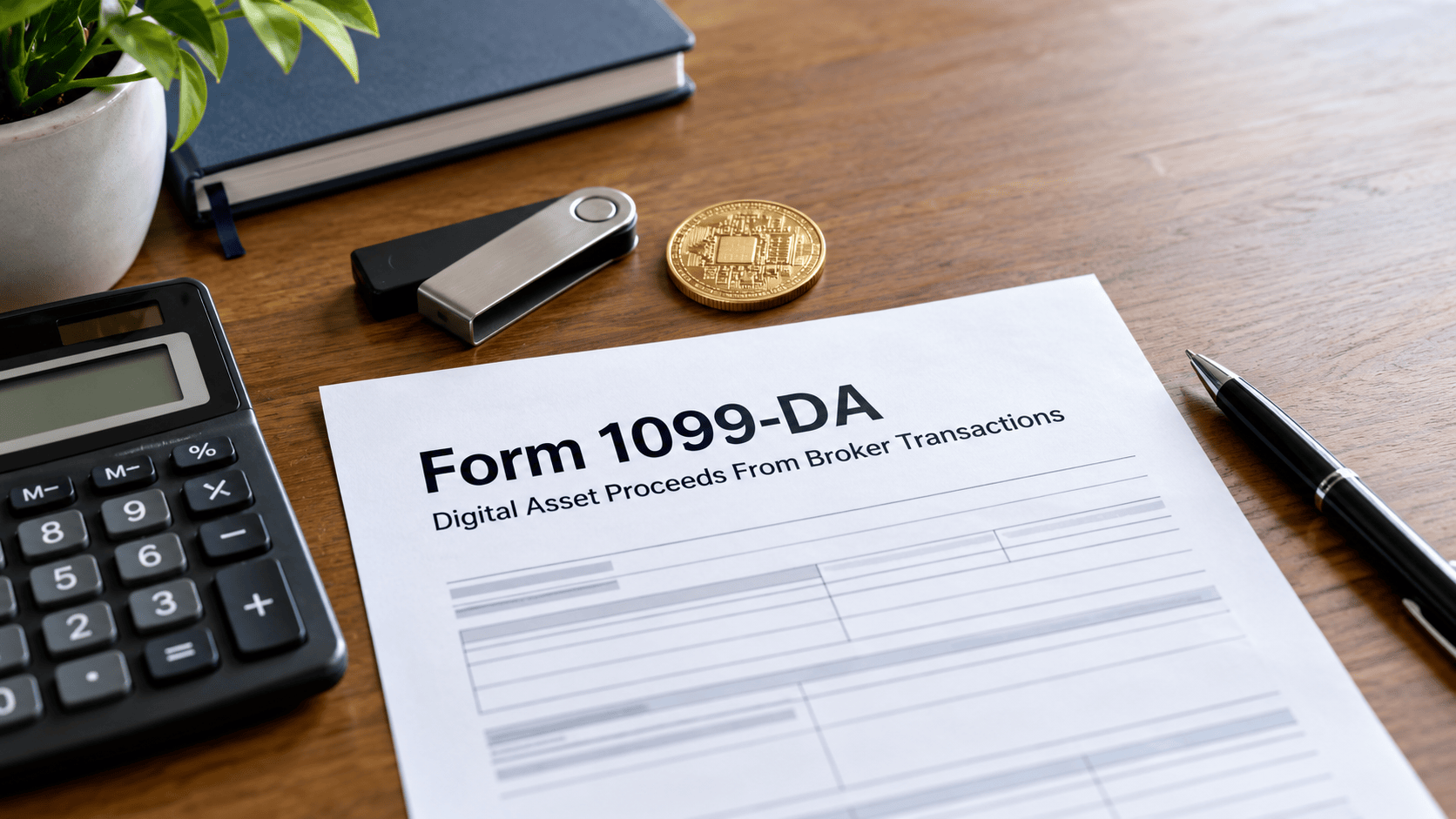
The IRS has introduced Form 1099‑DA, marking the most significant update to digital‑asset tax reporting since it began prompting “did you receive digital assets” on Form 1040. While much attention has been given to individual traders, the real danger lies in how the form may falter in practice, affecting both individuals and businesses alike.
How Form 1099‑DA Operates
Form 1099‑DA addresses a longstanding issue: unlike stock brokerages that report equity trades on Form 1099‑B, crypto brokers, exchanges, select custodial wallet services, and certain payment processors will soon be obligated to report the gross proceeds from digital‑asset sales for their customers, beginning with the 2025 tax year, with cost‑basis reporting to follow the next year.
Consequently, any entity classified as a broker under the final regulations will shoulder a reporting responsibility comparable to that of traditional securities brokerages, a burden previously alien to most crypto‑focused businesses.
The Hidden Cost‑Basis Gap
Crucially, an exchange can report cost basis only for assets it actually holds. Purchases made directly on the exchange are recorded accurately, but assets transferred from other wallets or platforms are considered “noncovered”; the exchange usually lacks the original purchase price, leaving the cost‑basis field on the 1099‑DA blank.
A blank cost‑basis entry does not absolve you of responsibility; you must determine the original cost basis using your own records, since the exchange bears no duty to provide it. Failure to do so can inflate your reported gain—and tax liability—while also increasing the likelihood of an IRS‑detected error.
DeFi Amplifies the Reporting Challenge
The IRS has clarified that existing broker reporting rules do not apply to decentralized or non‑custodial platforms, because these services never assume custody of the assets or collect user identity. Consequently, every DeFi transaction—whether a swap, liquidity provision, or yield generation—must be tracked, valued, and reported by you or your business. The lack of a 1099‑DA from such platforms does not provide a compliance advantage; it simply places the full recordkeeping responsibility on you, with no third‑party documentation to reference if the IRS inquires.
Escalating Complexity in Multi‑Asset Trading
A trader who sells a single asset for cash faces a straightforward cost‑basis calculation, but the complexity skyrockets when dealing with multiple asset classes, crypto‑to‑crypto swaps, wrapped tokens, cross‑chain bridges, or staking rewards received in a different token. Each of these events creates a separate taxable occurrence and its own basis question, potentially compounding the earlier reporting gaps. For active traders and businesses handling substantial digital‑asset volumes, manually reconstructing these records after the fact can become a weeks‑long effort to resolve just a few initial data deficiencies.
Immediate Actions for Compliance
First, verify that your business satisfies the regulatory definition of a broker, not merely the informal description found in most articles. Second, review your transaction history for assets received from other platforms or wallets, as these are the precise situations where a blank cost‑basis field may appear. Finally, if you engage in DeFi activities, presume that no 1099‑DA will be issued and establish your own recordkeeping proactively rather than attempting to reconstruct it later.
Accurate cost‑basis reconciliation and compliant tax filing are essential for determining true gains and losses on transferred‑in assets, DeFi activities lacking broker reporting, and multi‑asset trades. Specialized crypto and money‑transmitter accounting firms are equipped to manage this complexity, ensuring your filings are fully compliant and preventing overpayment of tax on unrealized gains.