







With only two preseason games remaining before the 2026-27 NHL campaign commences, the Washington Capitals are operating at maximum intensity. Several critical areas require attention before their opening matchup on October 2, yet the power play represents the most urgent focal point for refinement.
Last Season’s Struggles
Failing to secure sustained success under the power play was a decisive factor in missing the playoff corridor last season. Although the team compiled a .579 winning percentage, the gap between expectation and reality stood at three points, preventing a postseason berth. Had the Capitals been more effective in exploiting man advantages, they would have likely captured those pivotal victories necessary for advancement.
Over the past campaign, the squad managed just 17.8% of power play opportunities, placing them 25th in league-wide conversions. Within the tightly contested Metropolitan Division, each win serves as a vital currency for climbing standings. Should Washington have capitalized on superior power play production, additional points and a playoff bid would have become attainable.
This offseason transformation clearly signals the team’s ambition toward a deep playoff run. Building upon transformative acquisitions throughout the winter transfer market, the Capitals demonstrate a commitment to elevating their competition. In what appears to be Alex Ovechkin’s final regular season, the club seeks to grant him one last opportunity to compete for a Stanley Cup championship and conclude his era on a victorious note.


Even amid a subpar power play record, the team endured prolonged periods of division dominance and remained locked in playoff contention until the season’s close. An elite defensive foundation, versatile goaltending, and a potent forward trio collectively underpin this foundation.
Dylan Strome reflected on the errors of the prior campaign, noting that his unit failed to regain possession effectively during adverse situations. “We simply required a different approach,” he explained. “Last year involved excessive passivity and complacency. This season, we will adopt a proactive mindset focused on recovering the puck quickly and sustaining momentum from rebounds.”
Reworking the Power Play
To gain an edge, the organization must meticulously refine and specialized the power play unit for this season, capitalizing on a renewed core of skilled young athletes.
Under new direction from assistant coach Ray Bennett, the power play initiative has entered serious restructuring ahead of the preseason. Two distinct groupings have emerged — one anchored by veteran contributors and team pillars, and another comprised of newly acquired talent.
Veterans such as Logan Thompson, Charlie Lindgren, Owen Coutuart, Pierre-Luc Dubois, and Tom Wilson compose the foundational group. Notably, the power play already succeeds within specific unit dynamics developed through extensive collaboration across multiple seasons.
Established Unit
The veteran ensemble combines considerable experience with sharp communication, dissolving traditional defensive seams. Head coach Spencer Carbery emphasized that synchronized execution constitutes a cornerstone of offensive efficacy, rendering player integration essential for triumph.
Emerging Unit
The cohort featuring Ryan Leonard, Cole Hutson, Ilya Protas, Jordan Kyrou, and Alex Tuch presents fresh talent capable of delivering measurable impact. While initially untested as a cohesive unit, each member contributes distinctive abilities that merit exploitation through methodical practice.
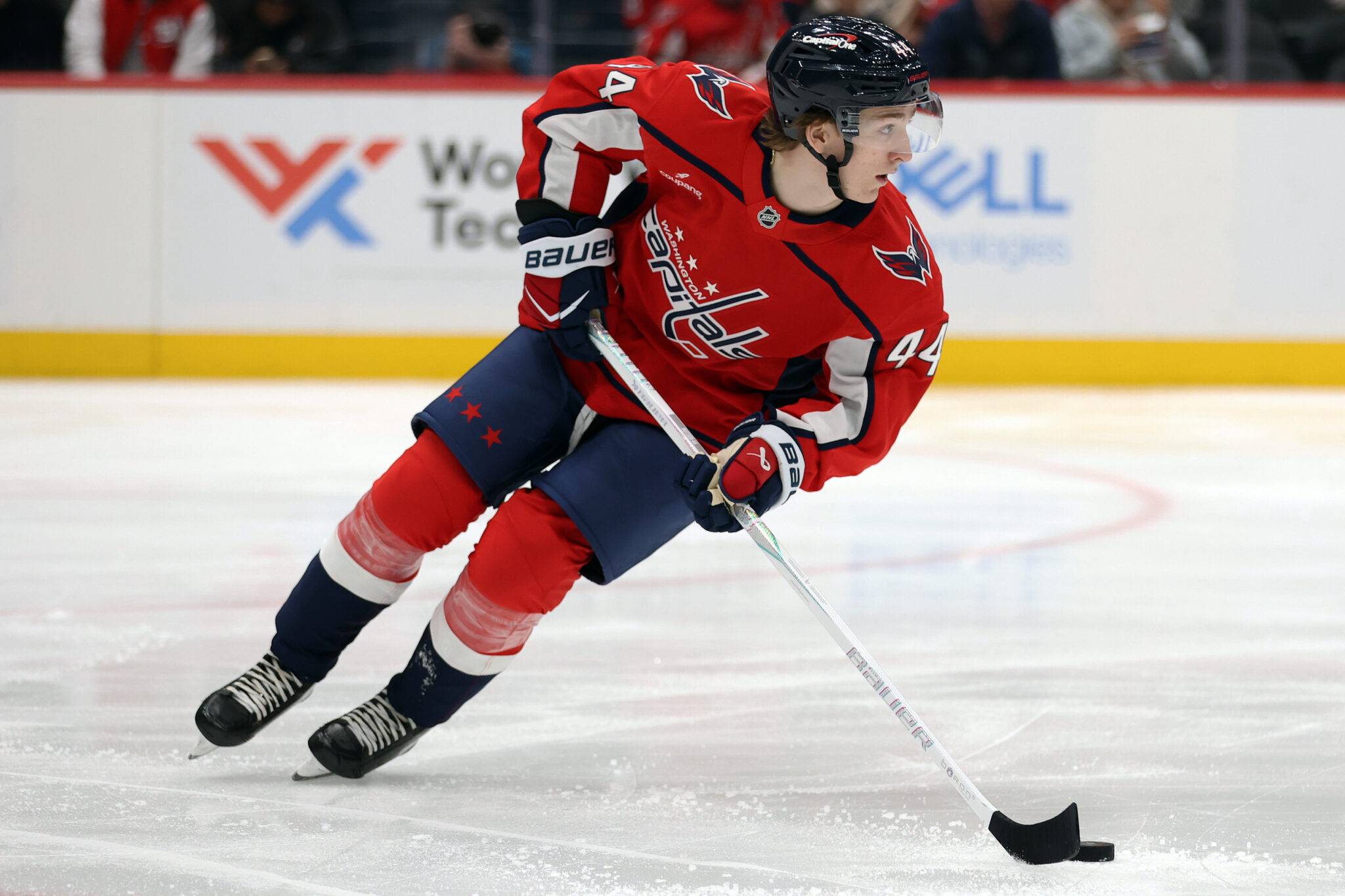
The structured design mirrors its counterpart, integrating a left-handed defenseman split between Chyczrun and Hutson, a physical cornerstone pair in Wilson and Protas, and three high-output, playmaking forwards. The veteran group’s entrenched rapport, combined with the fresh perspective and velocity of the recruits, creates a blueprint for significantly enhanced power play productivity.
Particularly compelling is Hutson’s demonstrated value on the secondary station. During a fourteen-game stretch concluding last season, the forward posted a 26.3% success rate when shuttling with man support, contributing to six of ten power-play goals. This emergence suggests he may serve precisely as the catalyst required to reconstruct the unit from foundational principles.
Across the preceding eight seasons, Washington achieved just one top-ten placement in the league for power play conversion rates. Can these budding power play configurations dismantle long-standing standing order problems and propel the club higher in the overall table? Bennett, Carbery, and the entire roster are committed to extracting maximum value from each available contest this year.


